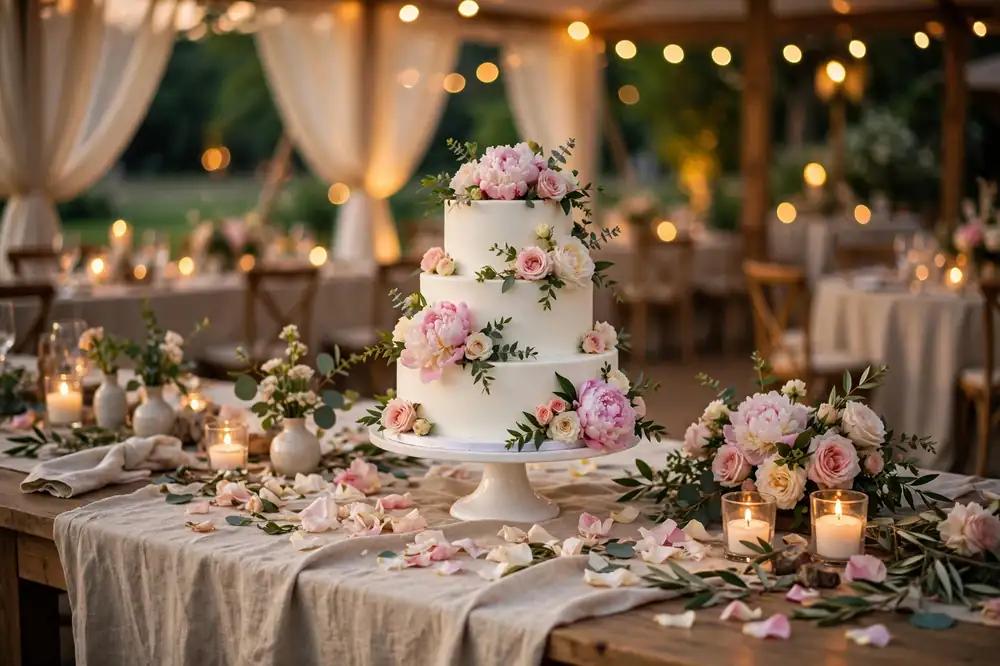
Fresh flowers are the easiest way to make a wedding cake look expensive. A simple buttercream cake with the right blooms looks like it came from a luxury bakery, even when the cake itself is modest.
But not every flower belongs on a cake. Some are toxic, and pesticide residue is a real concern. Every idea below names the blooms that work and how to place them safely.
Cascading Rose Waterfall
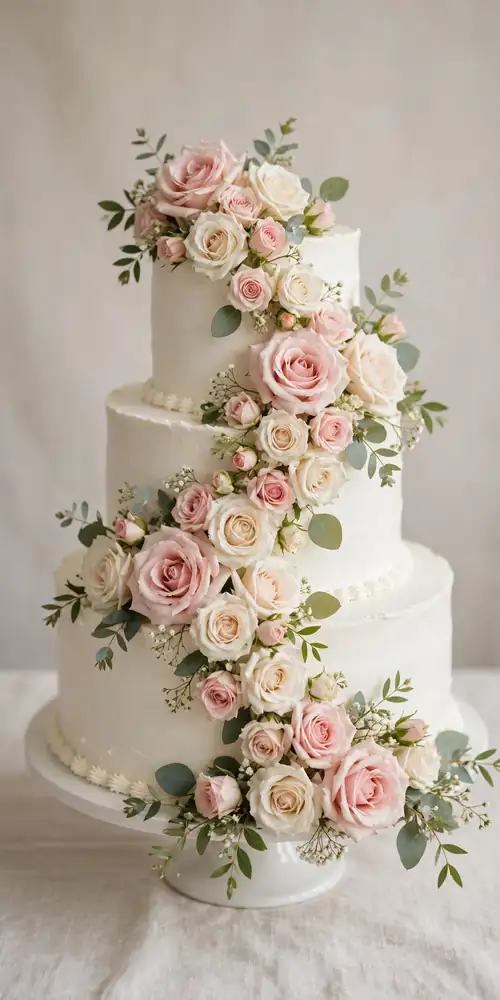
Fresh roses flowing down the front of a white buttercream cake from the top tier to the base, like a waterfall of blooms. Use two to three rose varieties in one color family, such as blush garden roses mixed with ivory spray roses, for a look with depth. Roses are food-safe as long as they are pesticide-free, so buy from a grower who knows the cake will be eaten. Keep the stems wrapped in floral tape and push them into the cake at an angle. Styling tip: build the cascade before the cake goes on display, but keep it in a cool spot. Roses wilt fast in a warm reception room.
Single Stem Minimalism
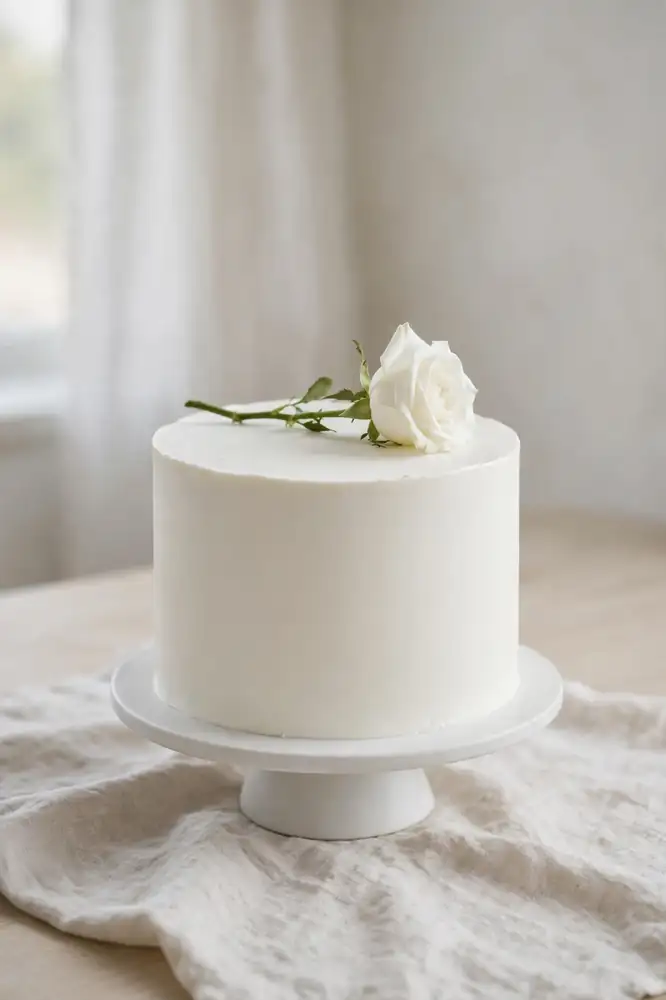
One perfect stem, such as a single white rose or a sprig of jasmine, laid across the top tier of a plain cake. This is the most modern look on the list and suits minimalist weddings. The flower has to be flawless since there is nothing else to hide behind. Jasmine and roses are both food-safe choices. Place the stem at the last minute so it looks fresh in photos. Styling tip: trim the stem short and rest it on a small disc of wax paper. The paper keeps the stem from touching the frosting directly.
Flower Wreath Topper
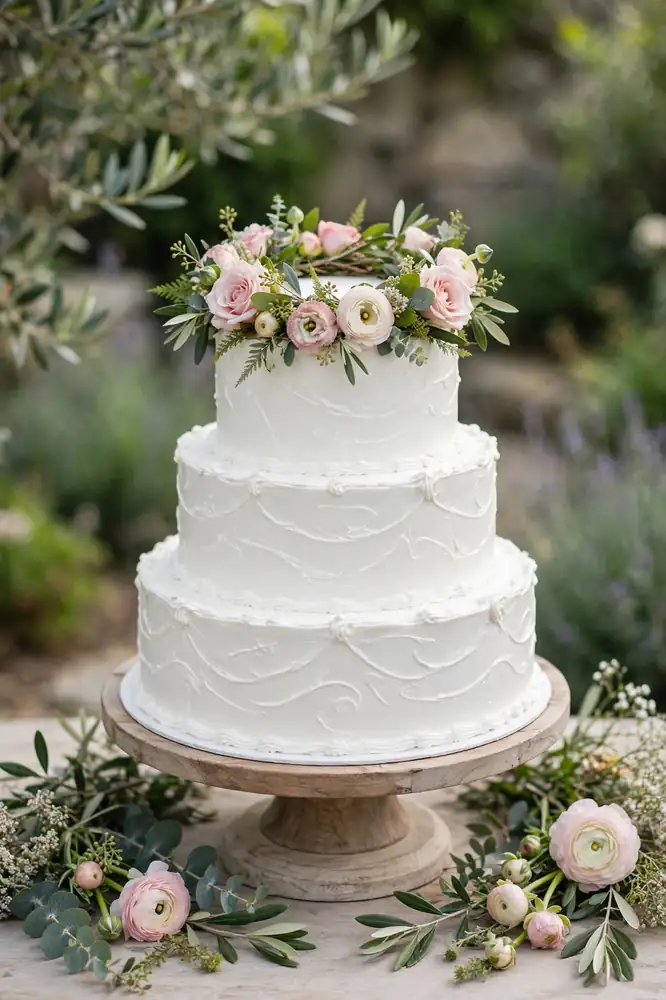
A small wreath of fresh blooms sitting on the top tier like a crown, with a hollow center that frames the cake. Build the wreath on a small foam or wire ring wrapped in floral tape, using roses, ranunculus, and greenery. Ranunculus is mildly toxic if eaten, so keep the wreath strictly as a topper that guests do not cut into. Remove it before serving. This suits romantic and garden weddings. Styling tip: size the wreath to about two thirds the width of the top tier. A wreath that matches the tier exactly looks like a lid instead of a crown.
Pressed Flower Finish
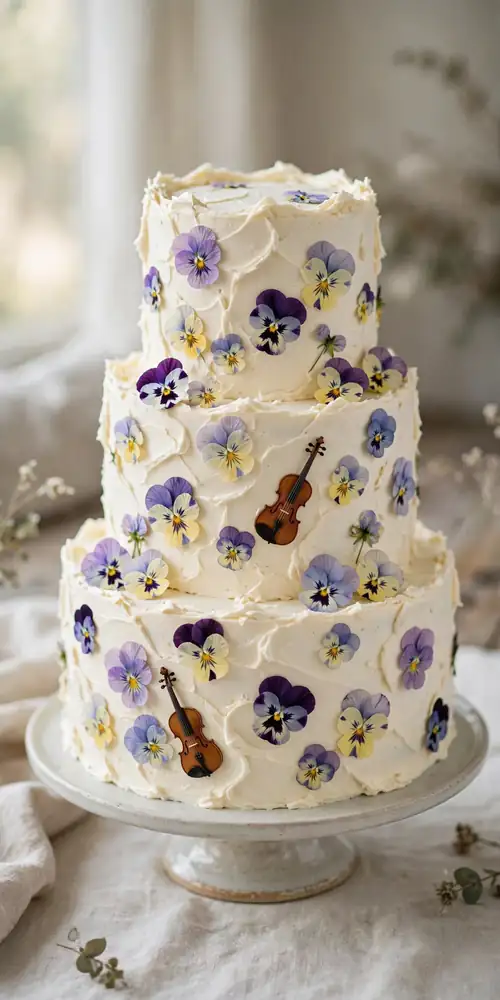
Edible pressed flowers, such as pansies and violas, pressed onto the buttercream like tiny artworks. This looks hand-crafted and delicate, and no two cakes come out the same. Pansies and violas are fully edible flowers, which makes this one of the safest designs here. Press the blooms between paper towels under heavy books for a week before the wedding. Apply them with a tiny dab of buttercream on the day. Styling tip: place the pressed flowers while the buttercream is still soft. Firm frosting cracks when you press the delicate petals into it.
Wildflower Meadow Base
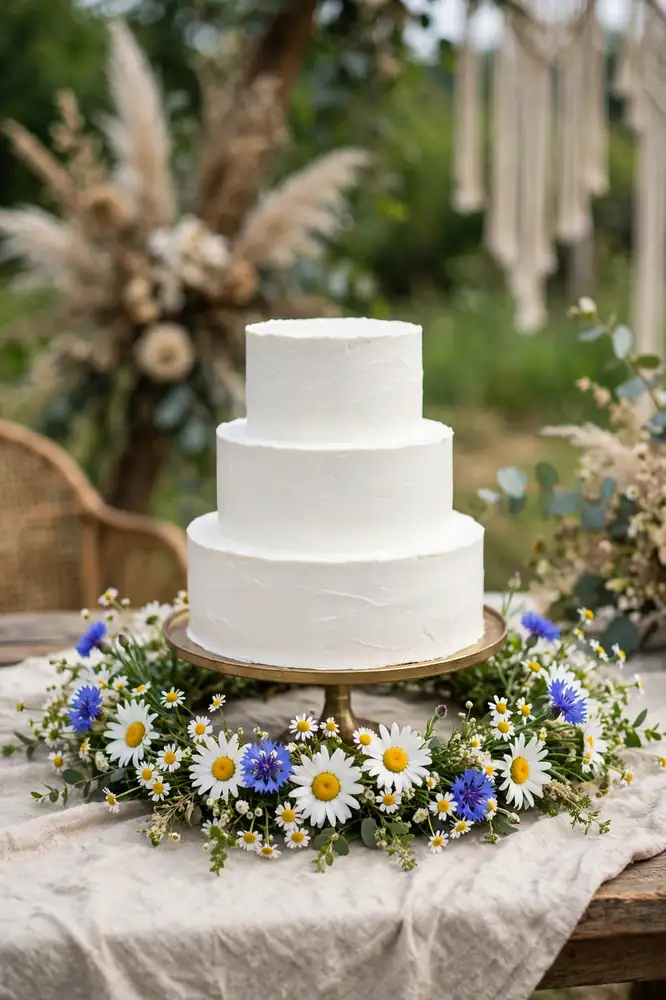
A ring of wildflowers, such as daisies, chamomile, and cornflowers, piled around the base of the cake on the cake stand. The cake itself stays plain while the meadow ring gives it color. Daisies and chamomile are food-safe, and cornflowers are edible too. Arrange the ring on the stand rather than on the cake so nothing touches the frosting. This suits outdoor and boho weddings. Styling tip: use odd numbers of each flower type, like five daisies and three cornflowers. Odd groupings look natural while even ones look planned.
Peony Clusters Between Tiers
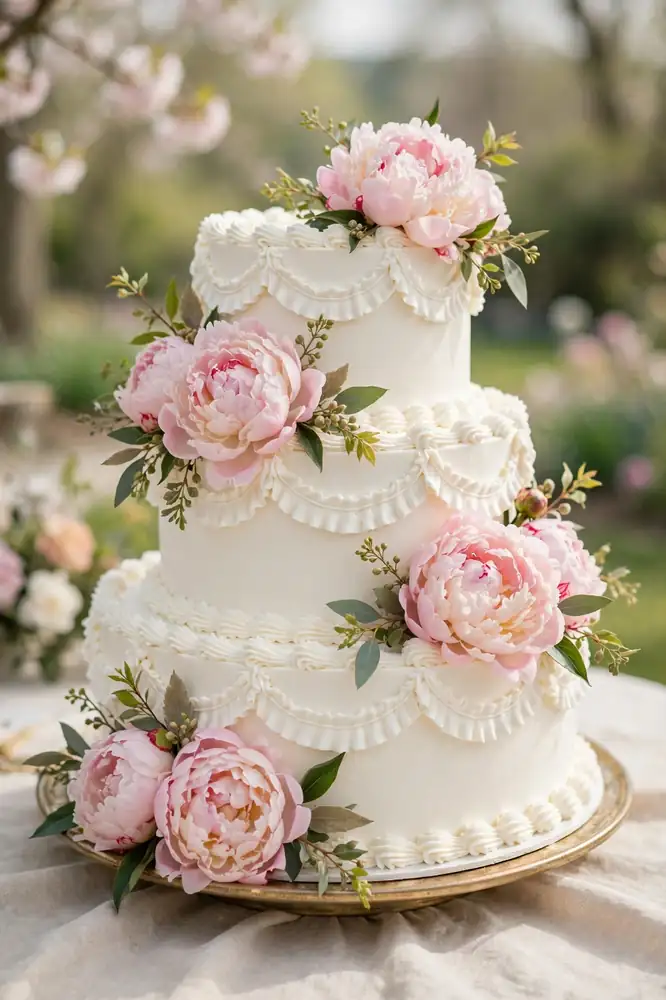
Big, ruffled peony blooms tucked into the gaps between cake tiers. Peonies are dramatic enough that three or four blooms carry the whole design. Peonies are not food-safe, so treat them as decoration only. Wrap stems in floral tape, keep blooms off the frosting with small wax-paper discs, and remove them before cutting. This is a classic luxury look for spring weddings when peonies are in season. Styling tip: choose blooms that are just opening rather than fully open. Tight buds hold their shape for hours, while fully open peonies drop petals on the cake.
Tropical Orchid Placement
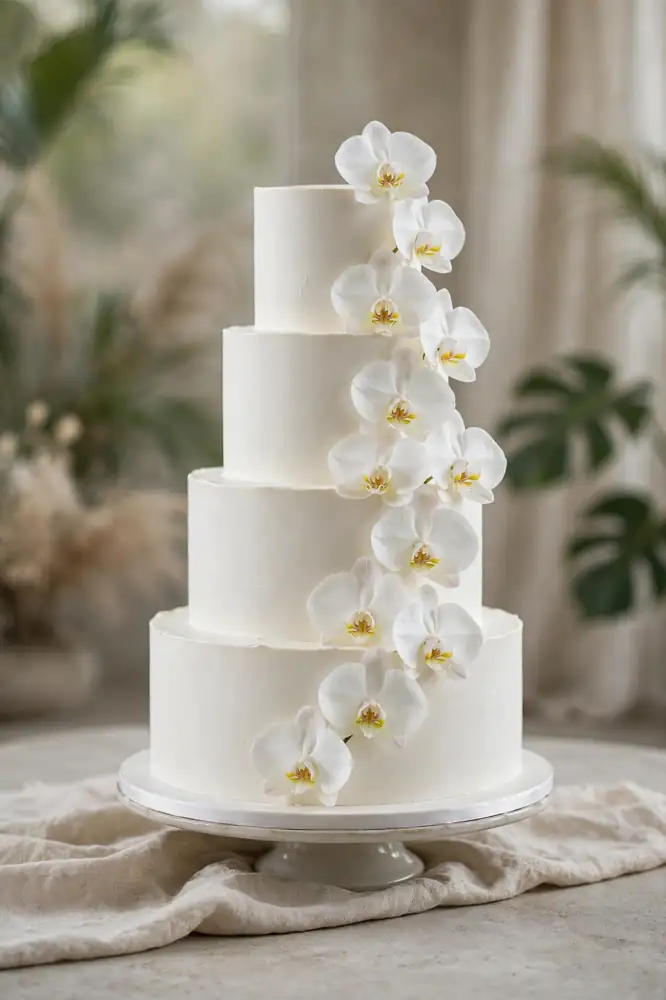
Phalaenopsis orchid blooms placed one by one on a modern cake, either trailing down the side or floating on the top tier. Orchids look exotic and sculptural, and they last well out of water. Orchids are generally considered food-safe, though they are grown for looks rather than eating, so keep them on wax paper and off the frosting. This suits modern and destination weddings. Styling tip: buy single orchid stems and separate the blooms yourself. Individual blooms placed by hand look far better than a whole spray laid on the cake.
Dried Lavender and Wheat
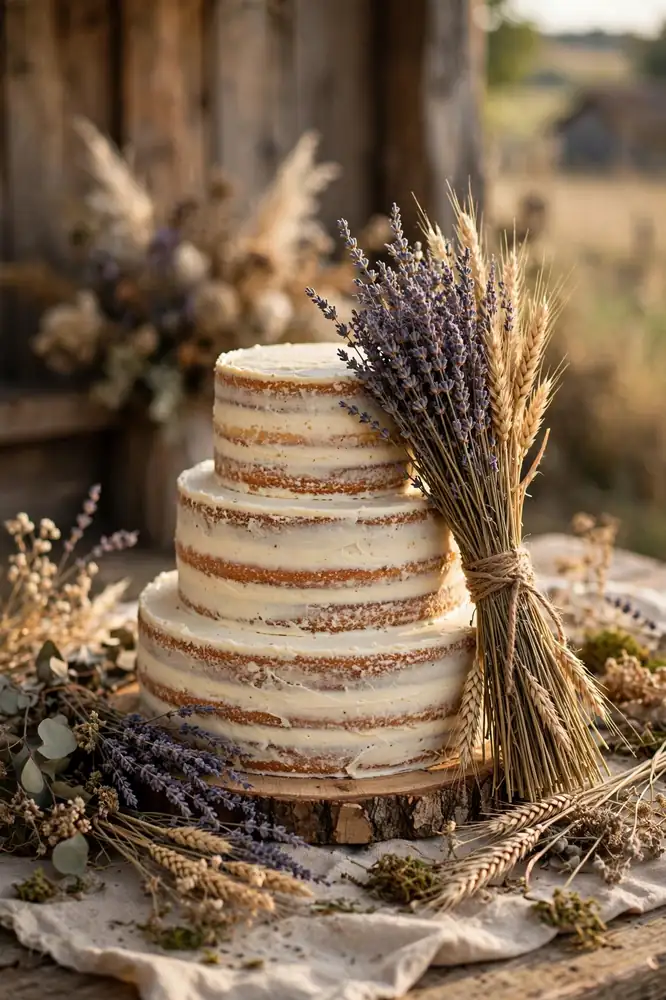
Dried lavender bundles and wheat stalks tied with twine and laid against a rustic buttercream or naked cake. The purple and gold tones suit countryside weddings, and dried florals never wilt. Lavender is edible in small amounts, but wheat stalks are not, so keep the bundles to the side of the cake rather than on top. This design also smells wonderful. Styling tip: use culinary-grade dried lavender. Decorative lavender is often treated with chemicals that should not be near food.
Sunflower Statement
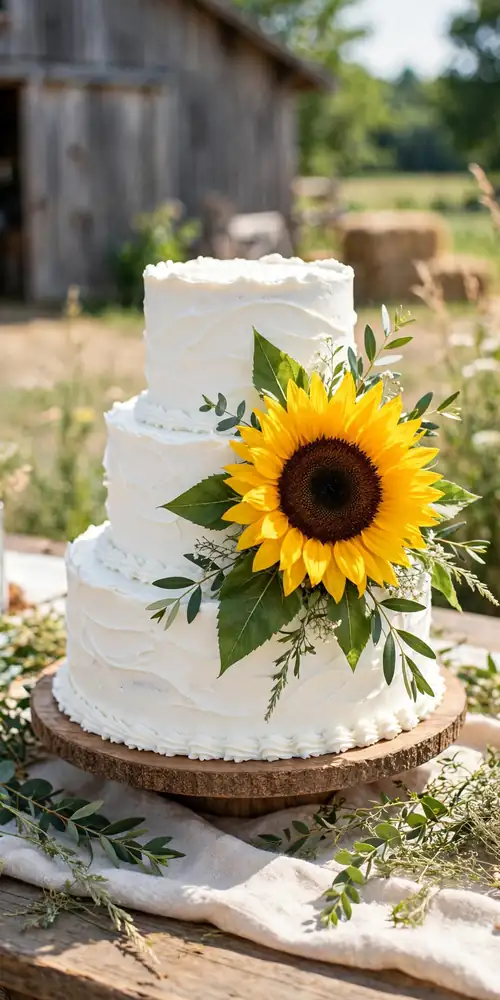
One or two large fresh sunflowers placed boldly on a white or pale yellow cake. Sunflowers are cheerful and unmistakable, which makes this the boldest look on the list. Sunflower petals are edible, though the dark center can stain frosting, so place the bloom on a wax-paper disc. This suits summer and farm weddings. Styling tip: pick sunflowers with tight, fresh centers and no browning. A tired center makes the whole cake look old, no matter how perfect the frosting is.
Jasmine and Vine Trails
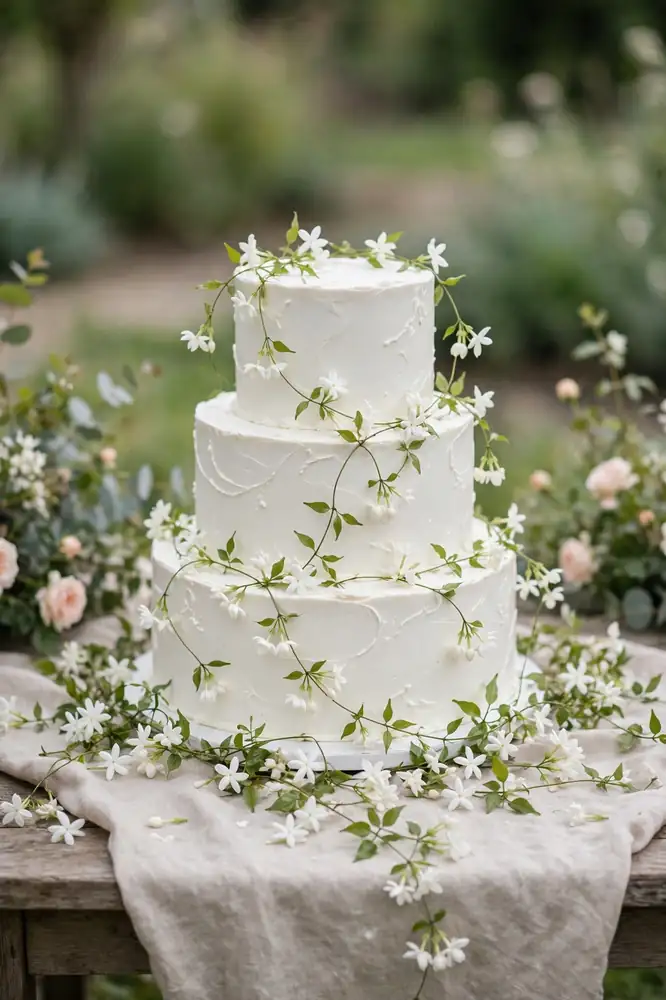
Thin trails of jasmine vines with tiny white flowers draped loosely around the cake tiers like living garlands. This is soft and romantic rather than bold, and the jasmine scent is a bonus. Jasmine flowers are food-safe, but confirm with your florist that the vines are untreated. Lay the vines on the day of the wedding since they dry out fast. Styling tip: let the vines trail off the cake stand onto the table. The spill-over looks natural, while vines cut exactly at the cake edge look stiff.
Bloom-Filled Open Tier
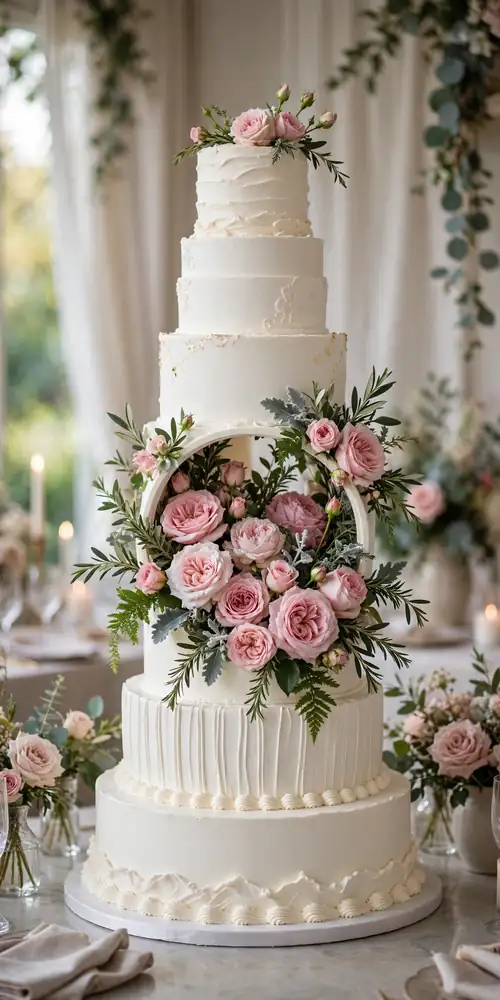
A cake design with one tier left open, meaning no cake at all in that layer, filled instead with fresh flowers and greenery. This dramatic look comes from high-end bakeries and always gets photographed. Use food-safe blooms like roses and lisianthus, arranged on a hidden cake board with a floral foam insert. Wrap all stems so nothing touches the cake above or below. Styling tip: match the open-tier flowers to your bouquet. The echo between the cake and the bouquet ties the whole wedding look together.
Whichever design you choose, tell your baker and your florist to talk to each other before the wedding. The baker knows the cake structure and the florist knows which blooms are safe. When they plan together, the flowers look beautiful and nobody eats anything they should not.
For more ideas like this, visit our Wedding Cake Ideas page.