
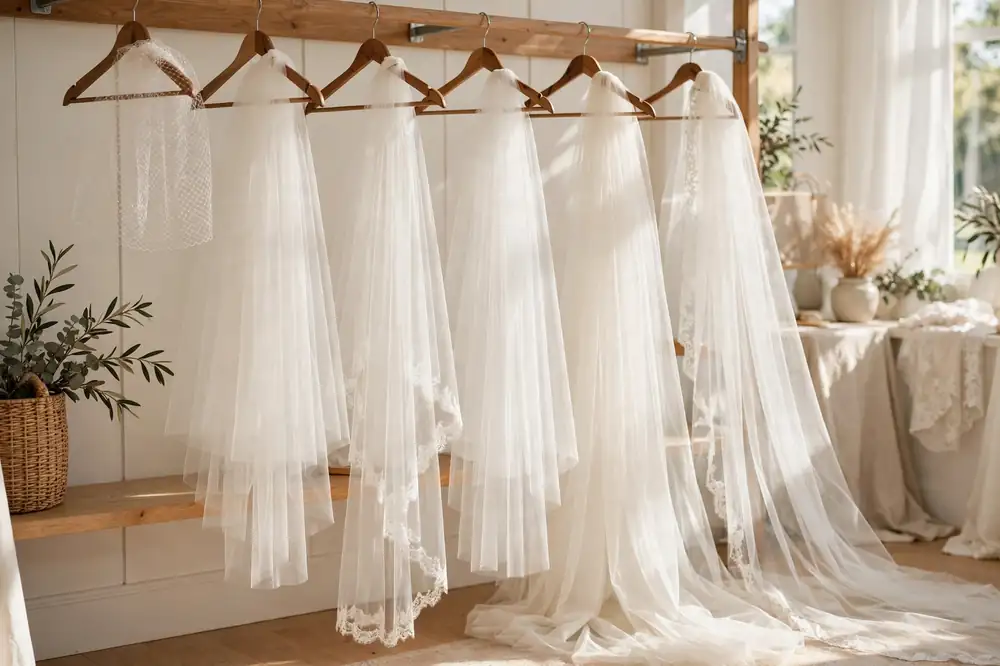
Choosing a veil can feel harder than choosing the dress. The veil changes your whole look in the photos, and there are more styles than most brides expect. Once you know the lengths and fabrics, the choice gets much easier.
This guide walks through 11 bridal veil styles, one by one. For each style, you get the length, the usual fabric, and the dress it pairs with best. Compare them, note your favorites, and bring this list to your bridal appointment.
Cathedral Veil
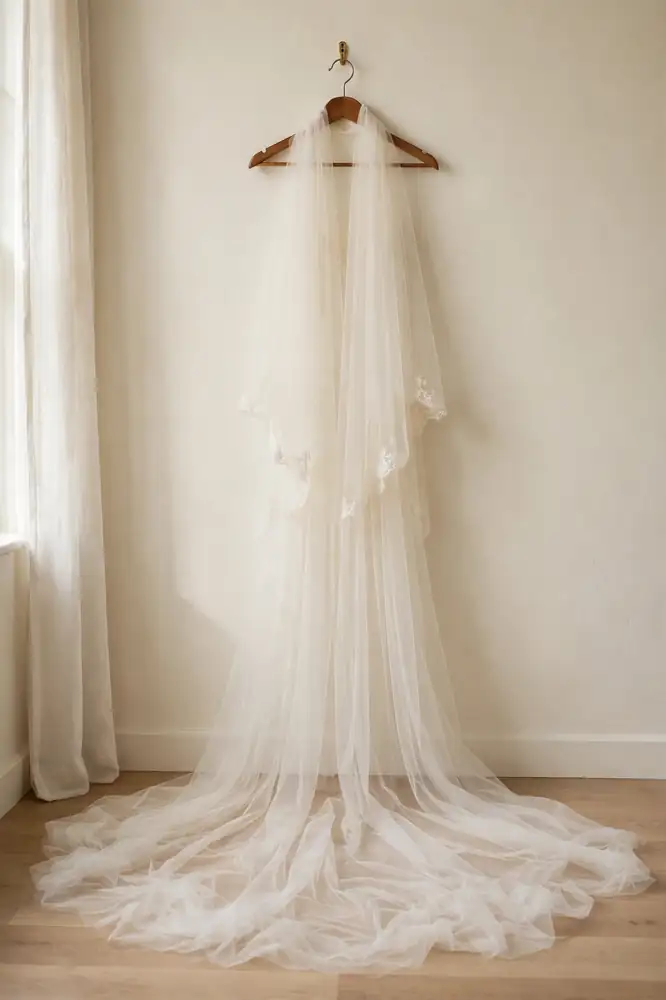
The cathedral veil is the longest style, usually 108 inches or more, which means it trails well past the train of the dress. It is made from sheer tulle with a raw cut edge or a thin satin trim, so it floats behind you as you walk down the aisle. This veil needs room to show its full length, which makes it the natural pick for church ceremonies and formal venues with long aisles. It works best with simple dresses, since a busy gown can fight with all that fabric. Pair it with a fitted gown or an A-line with a plain skirt. Styling tip: ask a bridesmaid to fluff the veil right before you walk in, because it photographs best when it is spread wide behind you.
Chapel Veil
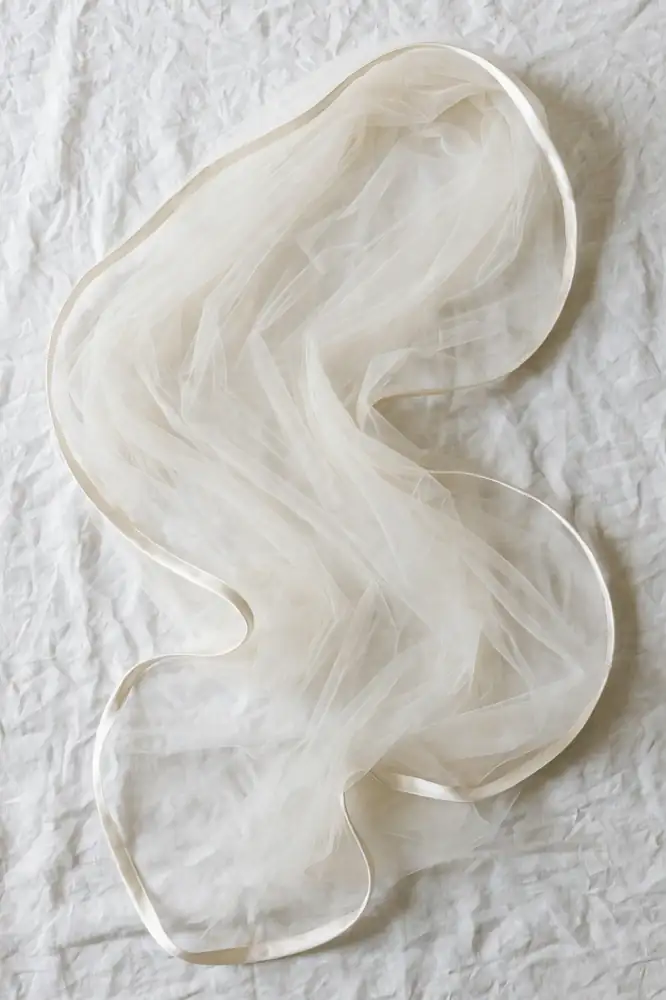
A chapel veil runs about 90 inches, long enough to trail a few inches behind your dress train. Like the cathedral, it is usually cut from soft tulle, but the shorter length makes it easier to manage all day. This is the most popular length for traditional weddings. It gives you the drama of a long veil without the heavy fabric of a cathedral. It pairs well with A-line and ball gown dresses, where the veil skims over the skirt instead of hiding it. Keep the edge simple if your dress has lace, or pick a lace-trimmed edge if your dress is plain. Styling tip: wear it for the ceremony and photos, then switch to a shorter veil or no veil for dancing, since long veils get stepped on at receptions.
Fingertip Veil
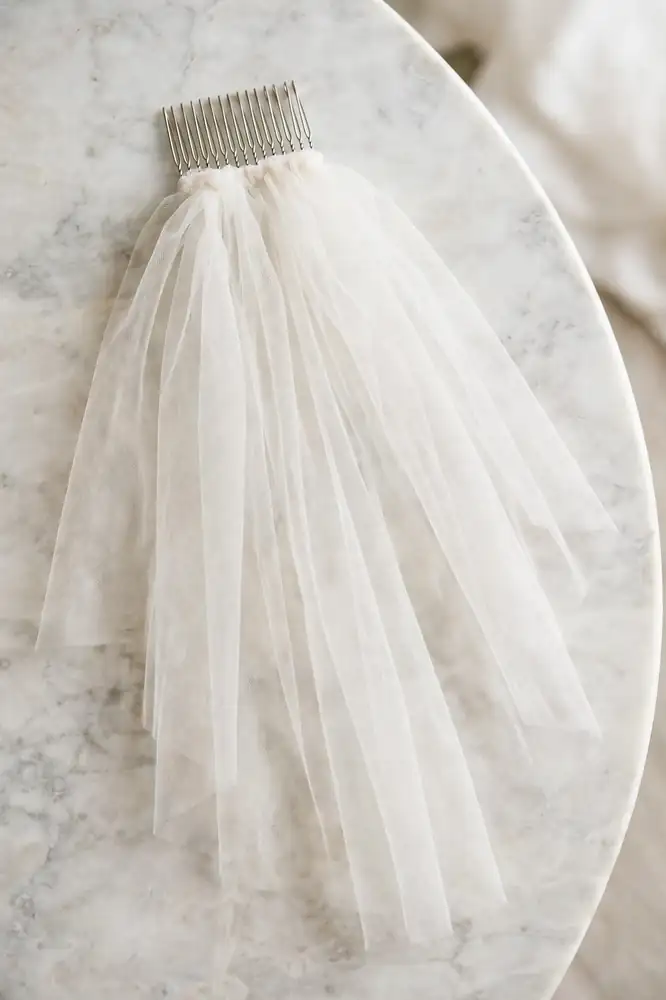
The fingertip veil ends at your fingertips, around 40 to 45 inches long. It is the most common veil length, and it works because it suits almost every dress shape. The tulle usually has a soft cut edge that falls cleanly over the shoulders without covering the dress bodice. Brides who want a classic bridal look without a long train gravitate to this length. It frames the face and upper body, which makes it a strong match for dresses with detailed backs, since it lifts away from the lace or buttons instead of pooling over them. Styling tip: have your hair stylist pin the comb at the crown rather than the back of the head, so the veil falls over your shoulders and frames your face in photos.
Elbow-Length Veil
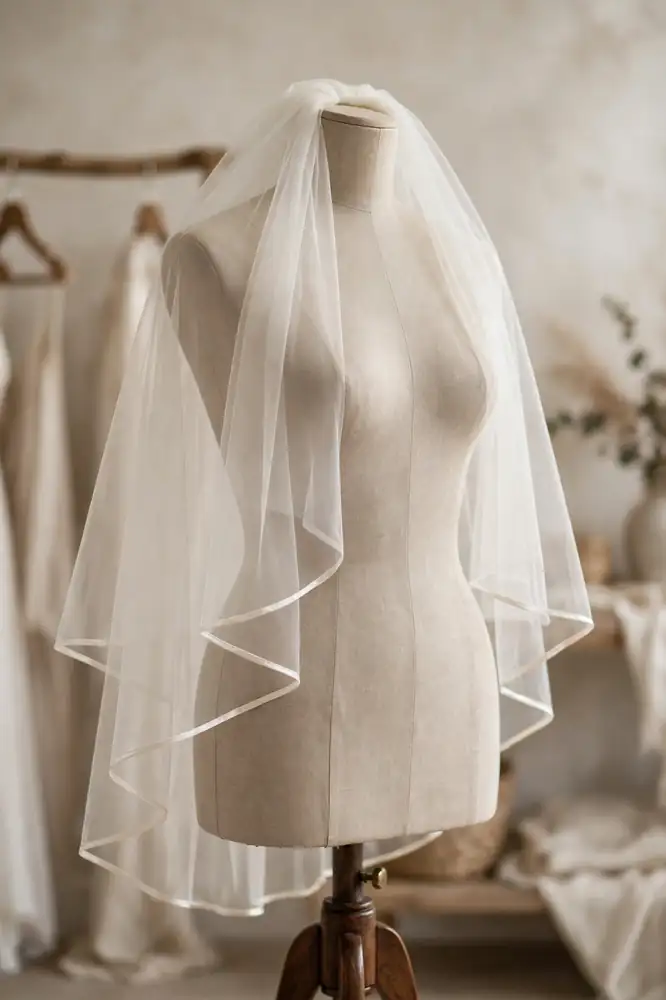
An elbow-length veil measures about 30 inches and ends right at the elbows. It is a sweet, vintage-feeling length that keeps attention on your face and the top of your dress. Because it is short, it never hides the back of the gown, which makes it a great partner for dresses with open backs, low backs, or detailed buttons. The fabric is almost always plain tulle, sometimes with a pencil-thin satin edge for a finished look. Brides having outdoor or windy weddings often choose this length because it stays put and does not tangle. Styling tip: this length looks best with an updo or half-up hair, since the veil needs a stable base to sit on.
Double-Tier Blusher Veil
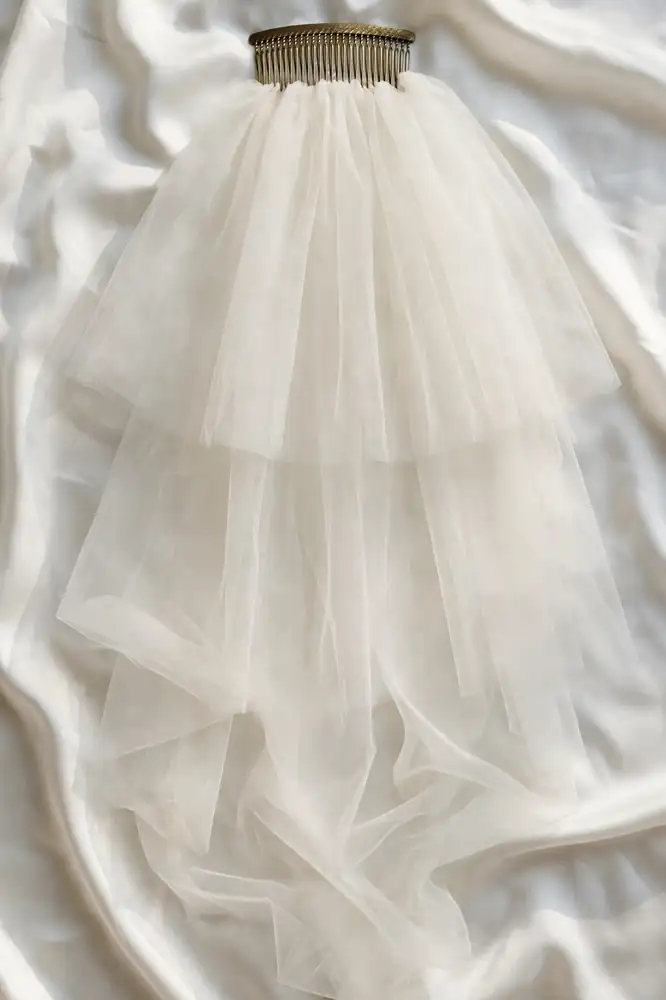
The blusher is a two-tier veil: a short layer that covers the face during the ceremony and a longer back layer for photos. The front piece is usually 30 inches or less, cut from ultra-sheer tulle so it does not blur your face. It adds a ceremonial moment, since someone lifts the blusher before the vows. Choose this style if you want a traditional wedding moment without committing to a very long veil. The back layer can be any length, but elbow or fingertip keeps the whole look light. It suits formal and semi-formal weddings best. Styling tip: practice lifting the blusher with your partner or officiant before the day, so the moment feels smooth instead of awkward.
Birdcage Veil
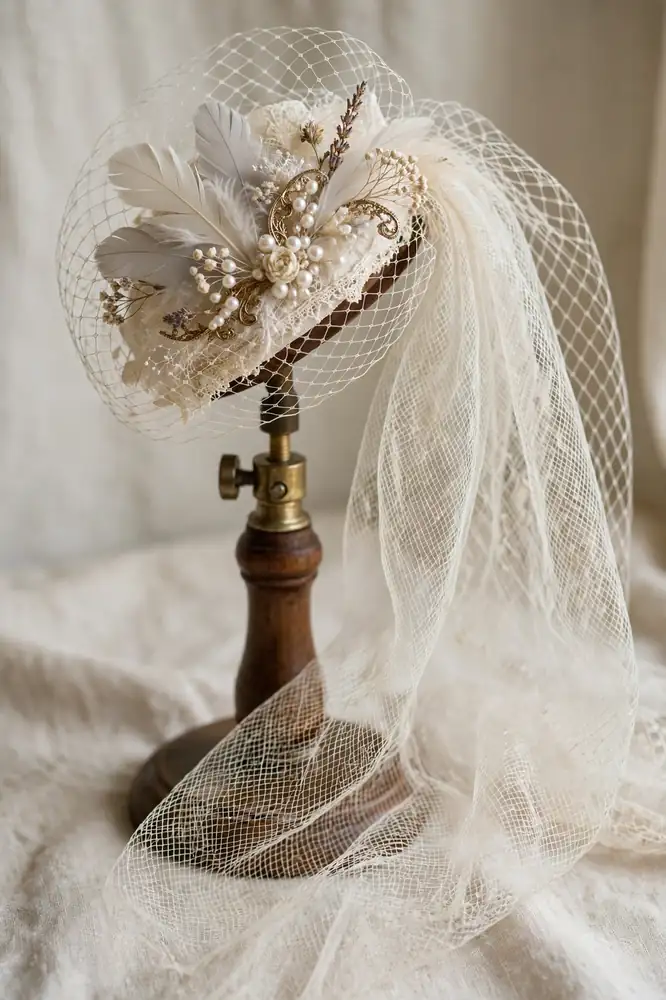
The birdcage is the shortest veil on this list, covering just the eyes or the nose with a small net of Russian veiling. It sits on the side of the head with a comb or a small fascinator, and it usually ends above the jawline. This is a vintage, retro choice that pairs with tea-length dresses, simple sheaths, and city hall weddings. It gives you a veil look without any long fabric to manage. The netting comes in different densities, so try both fine and wide mesh to see which flatters your face. Styling tip: wear a bold lip with this style, since the short net draws every eye to your face.
Mantilla Veil
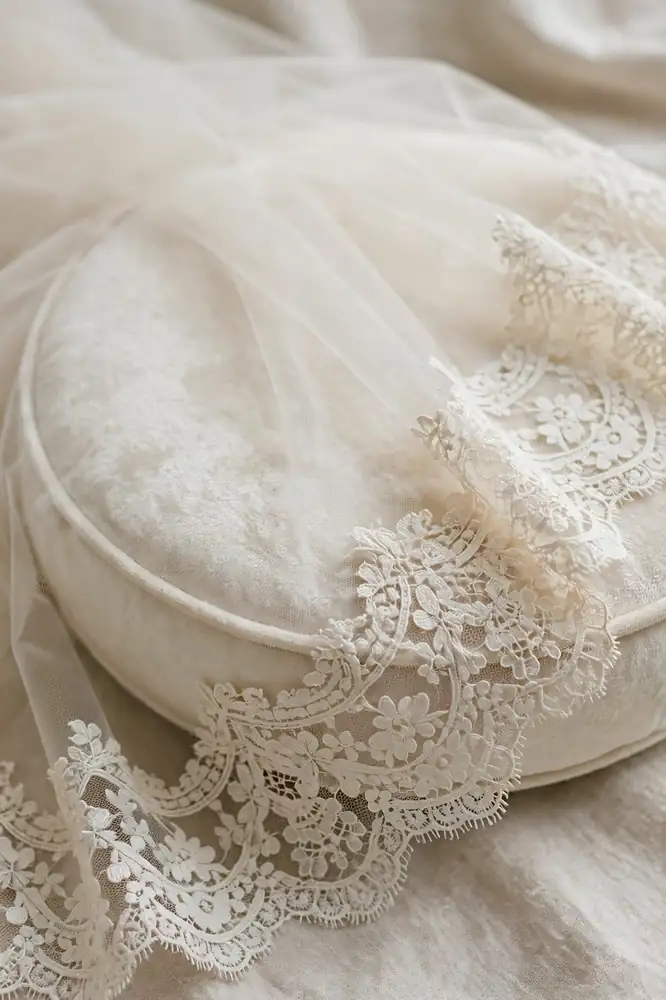
The mantilla is a Spanish-inspired veil trimmed all the way around with lace, worn draped over the head so the lace frames your face. It usually falls to fingertip or chapel length. The lace edge is the whole point, so the dress underneath should be simple, or the two patterns will clash. Ivory or off-white mantillas look best with ivory dresses; bright white lace can look harsh against a soft white gown. This style has a romantic, old-world feel that suits Catholic ceremonies and formal garden weddings. It works with both hair up and hair down, since the veil itself does the decorating. Styling tip: match the lace pattern to your dress lace as closely as you can, because mixed lace prints are the fastest way to make this look messy.
Drop Veil
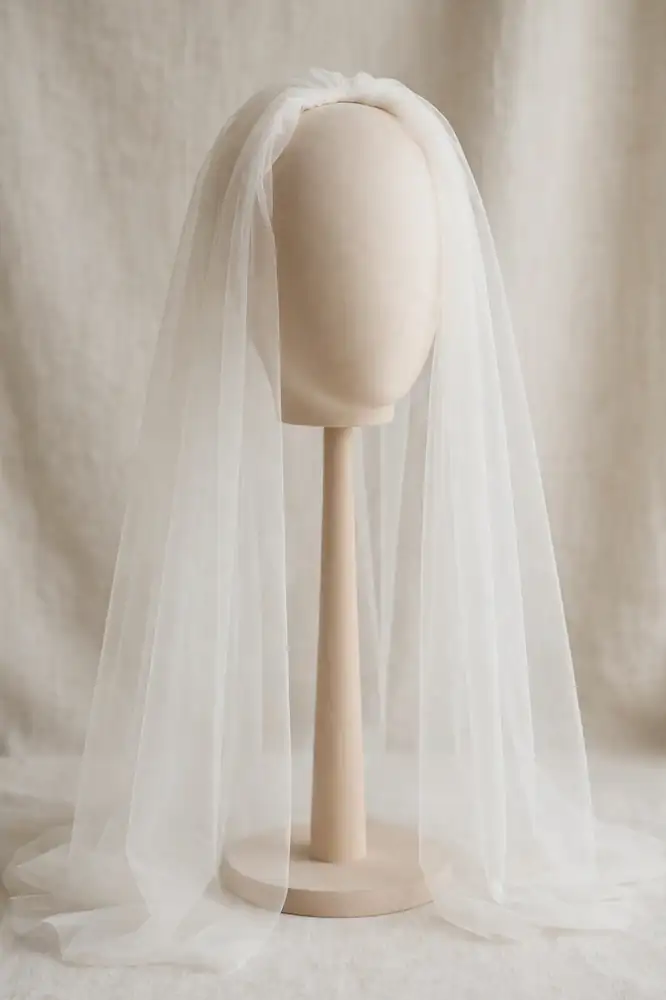
A drop veil has no comb at all. The tulle simply drapes over your head and falls on both sides, held in place by hidden pins your stylist places in your hair. Without a gathered comb, the fabric lies flat and smooth, which creates a soft, modern look with clean lines. This style suits minimalist dresses and brides who want their veil to look weightless. It works at any length from fingertip to cathedral, though shorter drop veils are easier to secure. Because there is no comb, it sits well with low buns and sleek styles. Styling tip: bring extra bobby pins to your appointment, because drop veils shift more than comb veils and your stylist may need to re-pin them during the day.
Waterfall Veil
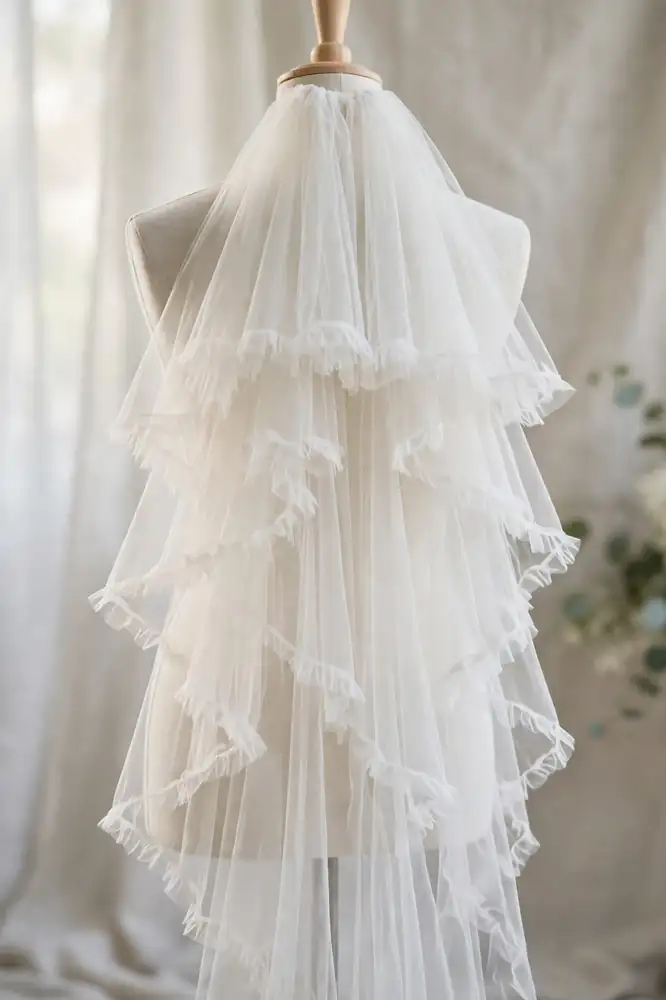
The waterfall veil is cut in a circle or oval of tulle that cascades over the shoulders in layers, like water over rocks. The edges fall in soft tiers instead of one flat sheet, which gives the veil natural movement in photos. It is usually made from extra-soft English tulle so the layers drape instead of sticking out. This style looks beautiful with fitted dresses and mermaid gowns, where the layered fabric echoes the curves of the dress. It also photographs well in wind, since the layers lift and separate. Choose a plain edge if your dress has texture, or a beaded edge for evening weddings. Styling tip: this veil needs to be fluffed between shots, so keep a bridesmaid nearby during photos.
Waltz Veil
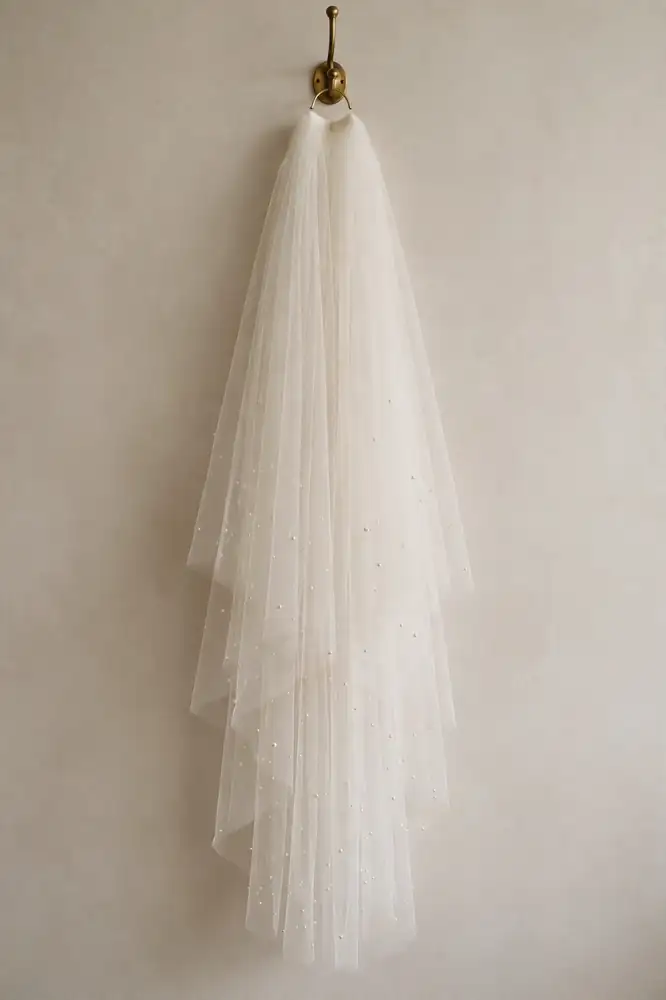
A waltz veil falls to about knee or calf length, around 60 inches, landing between the fingertip and the chapel. The name comes from the idea that it is long enough to be dramatic but short enough to dance in, which makes it a practical pick for brides who want one veil for the whole day. It moves well in photos and does not drag on the floor, so it stays clean through the ceremony and reception. The usual fabric is soft tulle with a cut edge, though some versions have scattered pearls or tiny crystals. It pairs nicely with A-line and slip dresses. Styling tip: if your venue has stairs, this length trails just enough to look grand in stair photos without catching under your shoes.
Juliet Cap Veil
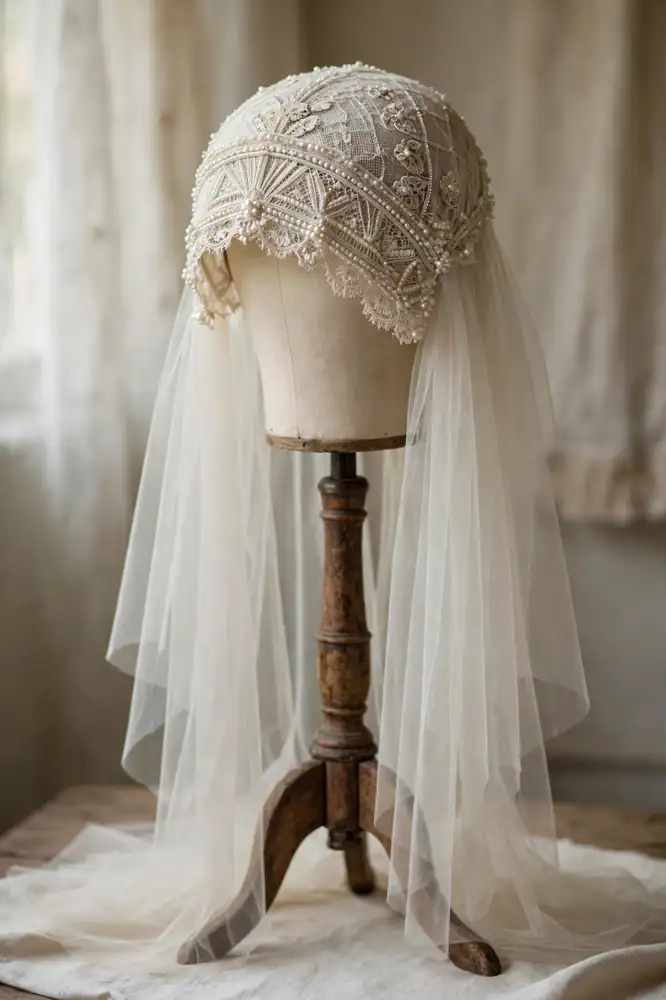
The Juliet cap is a vintage style where a cap of lace or beaded fabric fits close to the head, with tulle at its sides. It sits low on the head, which gives it a 1920s feel, and it works with short hair or hair pulled back. The cap is the decoration, so the tulle is plain and fingertip length. This is the right pick for a vintage or art deco wedding with a beaded or slip dress. Styling tip: match the cap to your dress details, so the look reads as one outfit.
The right veil is the one that makes your dress look better and feels easy to wear. Start with the length that fits your venue, then pick the fabric and edge that match your dress. Bring photos of your dress to every veil appointment, and try at least three lengths before you decide.
For more ideas like this, visit our Wedding Outfit Ideas page.