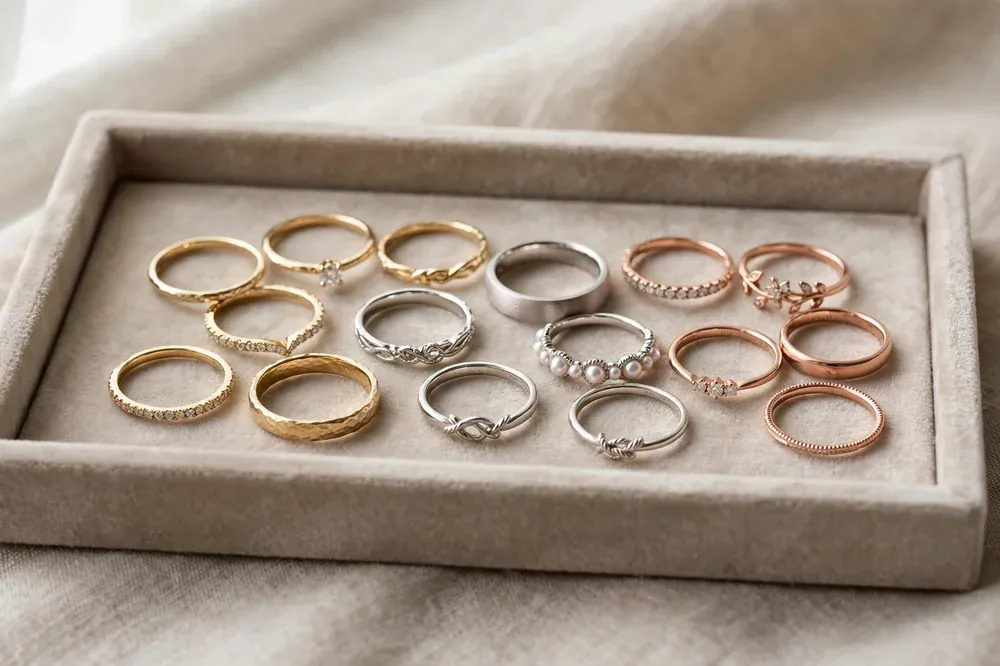
A wedding ring is the one piece of jewelry you will wear every day, so it is worth taking your time over the choice. The options are wider than they first look: different metals, different stones, and settings that change how a ring catches the light. A ring that looks perfect in a shop window can feel very different on your own hand.
This guide covers 11 wedding rings for women, one style at a time. For each style, you get the metal, the stone, and the setting, plus a styling tip for wearing it. Compare them, note what suits your hand, and use this list when you shop.
Classic Yellow Gold Ring
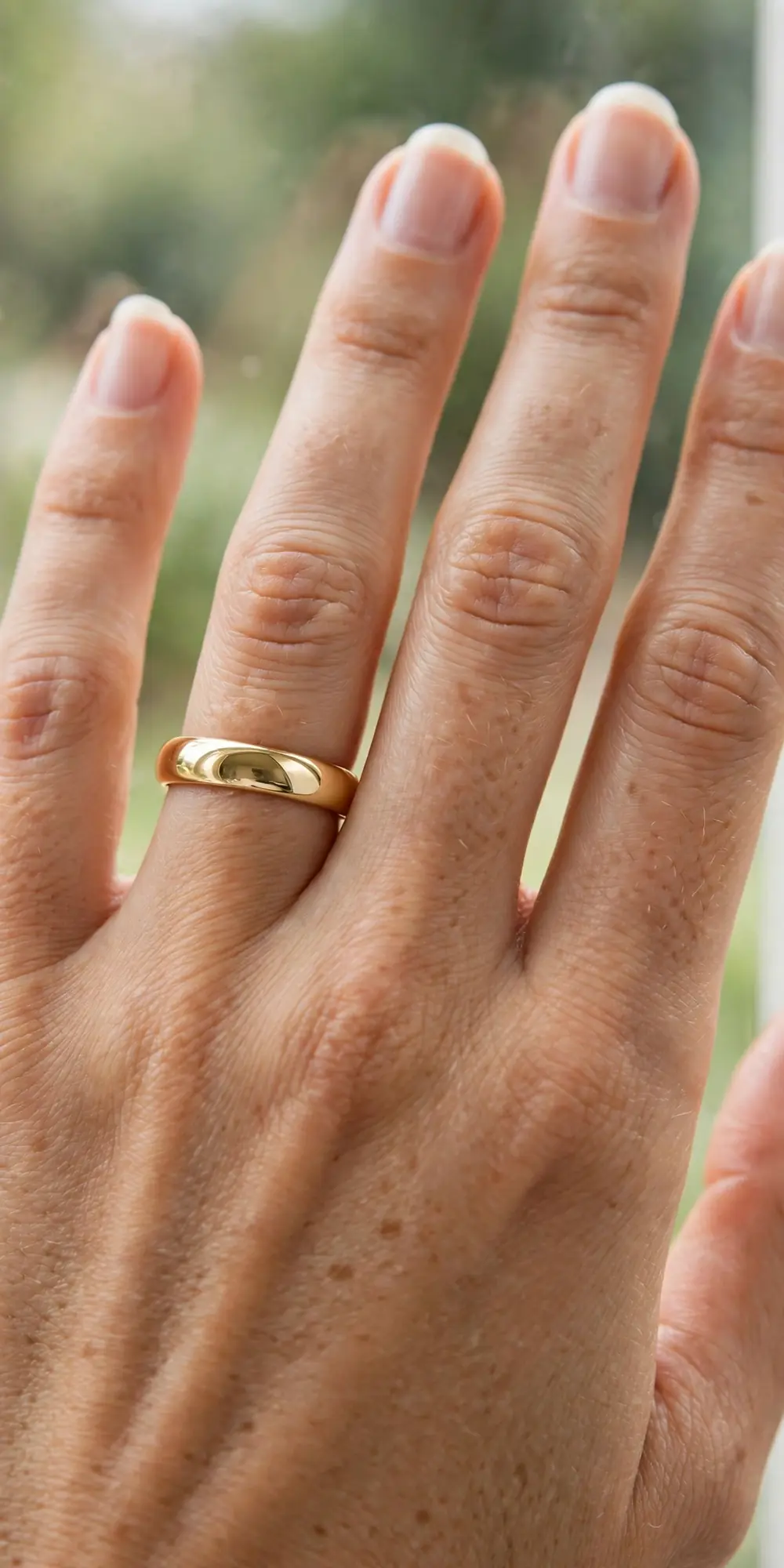
Yellow gold is the original wedding ring metal, and it still suits brides who want a warm, traditional look. The band is usually 14k or 18k gold, which means it is mixed with other metals for strength, since pure gold is too soft for daily wear. A polished finish gives it a bright shine, while a brushed finish looks softer and hides small scratches better. Yellow gold pairs well with warm skin tones and with diamonds that have a slightly warm tint, which often cost less than icy white stones. It also matches vintage and heirloom jewelry, so it is a good pick if you plan to wear family pieces with it. Styling tip: if your engagement ring is white gold or platinum, try a two-tone wedding band with a yellow gold center, so both rings sit together without clashing.
Sterling Silver Ring
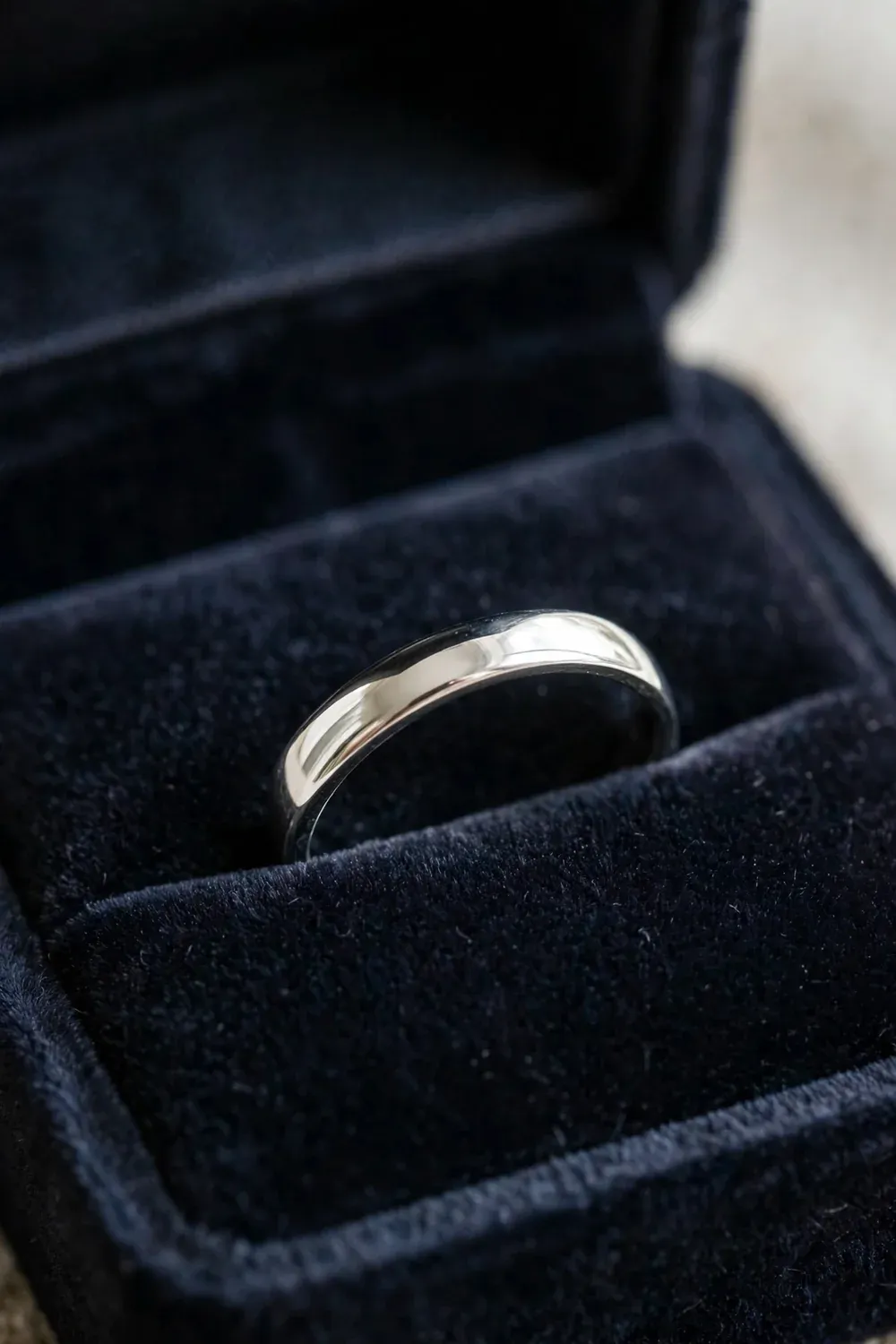
Sterling silver is the most affordable way to get a bright white metal ring, and it looks close to white gold at a fraction of the price. It is stamped 925, which means it is 92.5 percent pure silver mixed with a small amount of copper for hardness. The trade-off is care: silver tarnishes when it sits unworn, and it scratches more easily than gold or platinum. A quick polish with a silver cloth brings the shine back, and storing the ring in a closed box slows tarnish. This is a smart choice for a second ring, a travel ring, or a wedding band you plan to replace later with a precious metal version. Styling tip: keep a silver polishing cloth in your jewelry box and give the ring a wipe once a week, so it never looks dull in photos.
Vintage-Inspired Ring
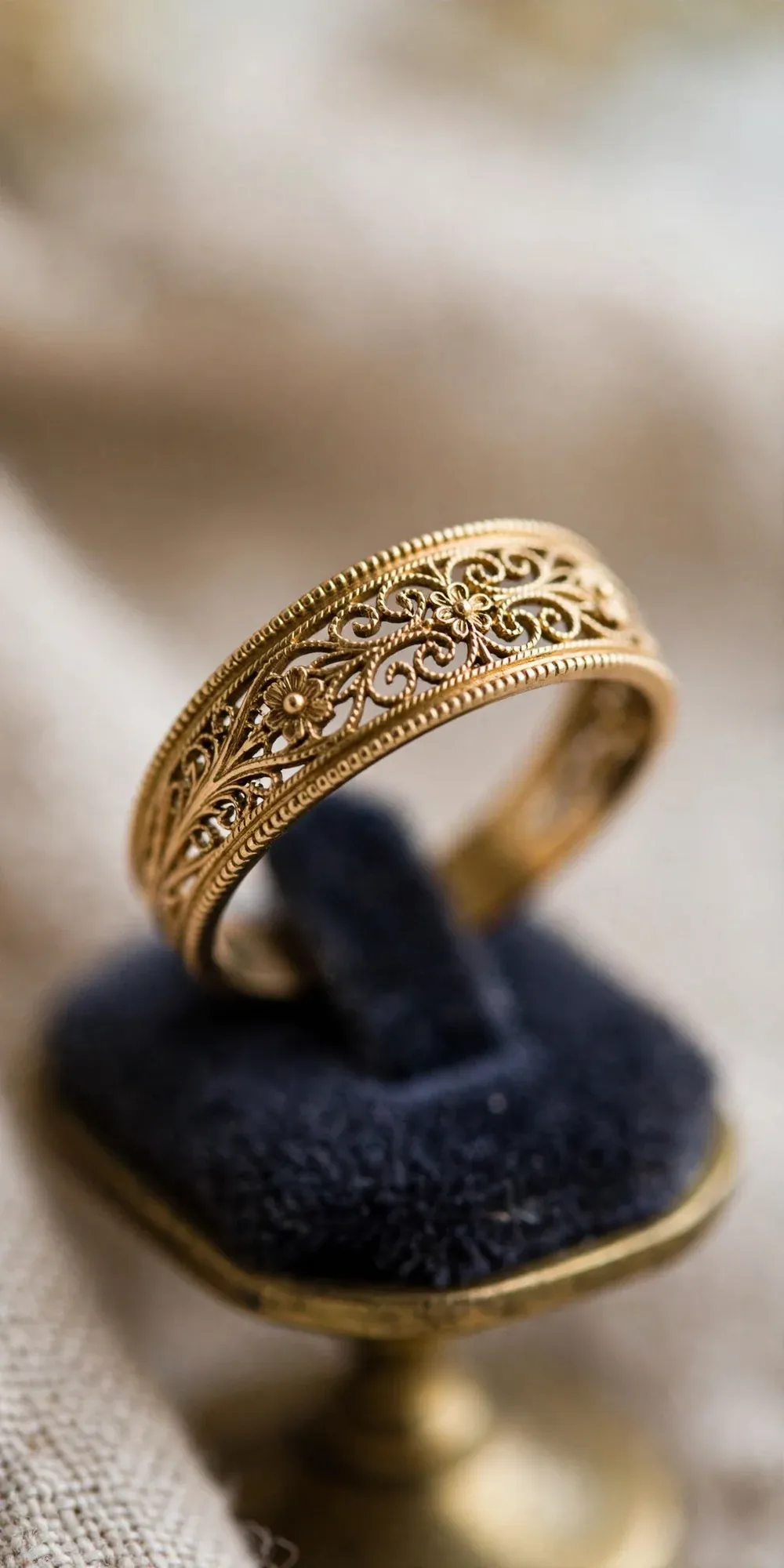
A vintage-inspired ring borrows details from past eras: milgrain edges, fine filigree work under the stone, and old-cut diamonds with a softer sparkle than modern cuts. Art Deco styles use geometric shapes and straight lines, while Edwardian styles use lace-like metalwork and small accent stones. The metal is usually white gold or yellow gold, and the band is often thinner than a modern ring, which makes the detail work stand out. These rings suit brides who love antique shops and heirloom style, and they pair well with lace dresses and pearl jewelry. Because the detail is delicate, ask the jeweler how the setting holds up to daily wear before you buy. Styling tip: wear a vintage ring with one other antique-style piece at most, like pearl studs, so the ring stays the focus.
Diamond Engagement Ring
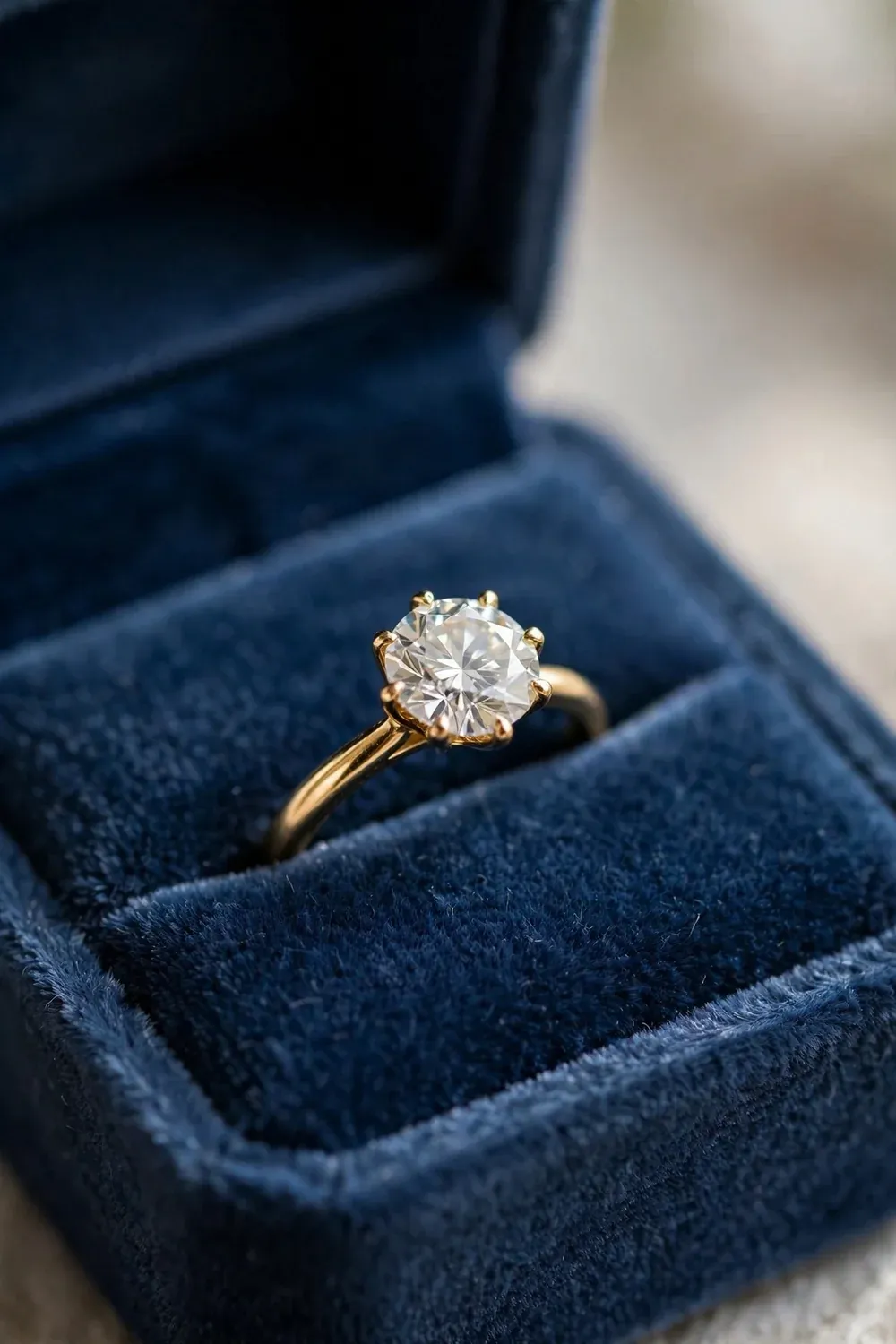
The engagement ring is the ring given at the proposal, and it usually carries the largest stone of the set. Most engagement rings use a diamond, chosen by cut, color, clarity, and carat weight, but sapphires and moissanite are common choices too. The setting matters as much as the stone: a high setting lifts the diamond above the band and catches more light, while a low setting sits closer to the finger and snags less on clothes. Think about your daily life before you pick a stone size, since a very tall ring can catch on sweaters and gloves. The wedding band you choose later should sit flat next to this ring, so bring the engagement ring when you shop for the band. Styling tip: if you work with your hands, pick a lower setting and a sturdy band, since it will take far fewer knocks over the years.
Solitaire Ring
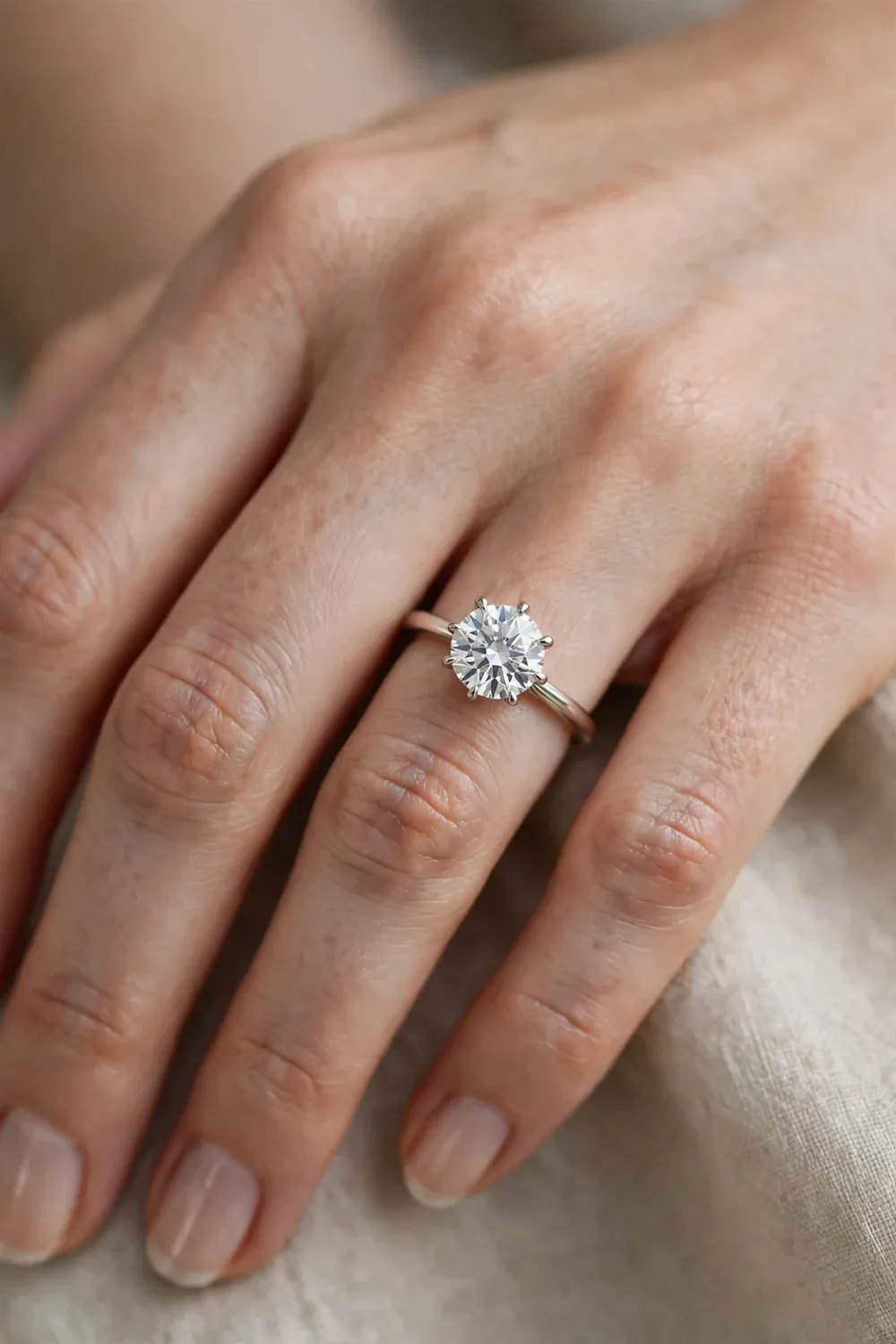
A solitaire is a single diamond set alone on a plain band, with no side stones to distract from it. The classic version uses six prongs to hold a round brilliant diamond, which is the cut that gives the most sparkle. Because there is only one stone, its quality shows clearly, so cut matters more than size here: a well-cut smaller diamond outshines a poorly cut larger one. The band is usually white gold, yellow gold, or platinum, and it can be thin for a delicate look or slightly wider for a bolder one. Solitaires suit almost every hand shape and every dress style, which is why they stay popular year after year. Styling tip: a thin solitaire band leaves room to stack a wedding band and an anniversary band beside it later, so it grows with your collection.
Halo Setting Ring
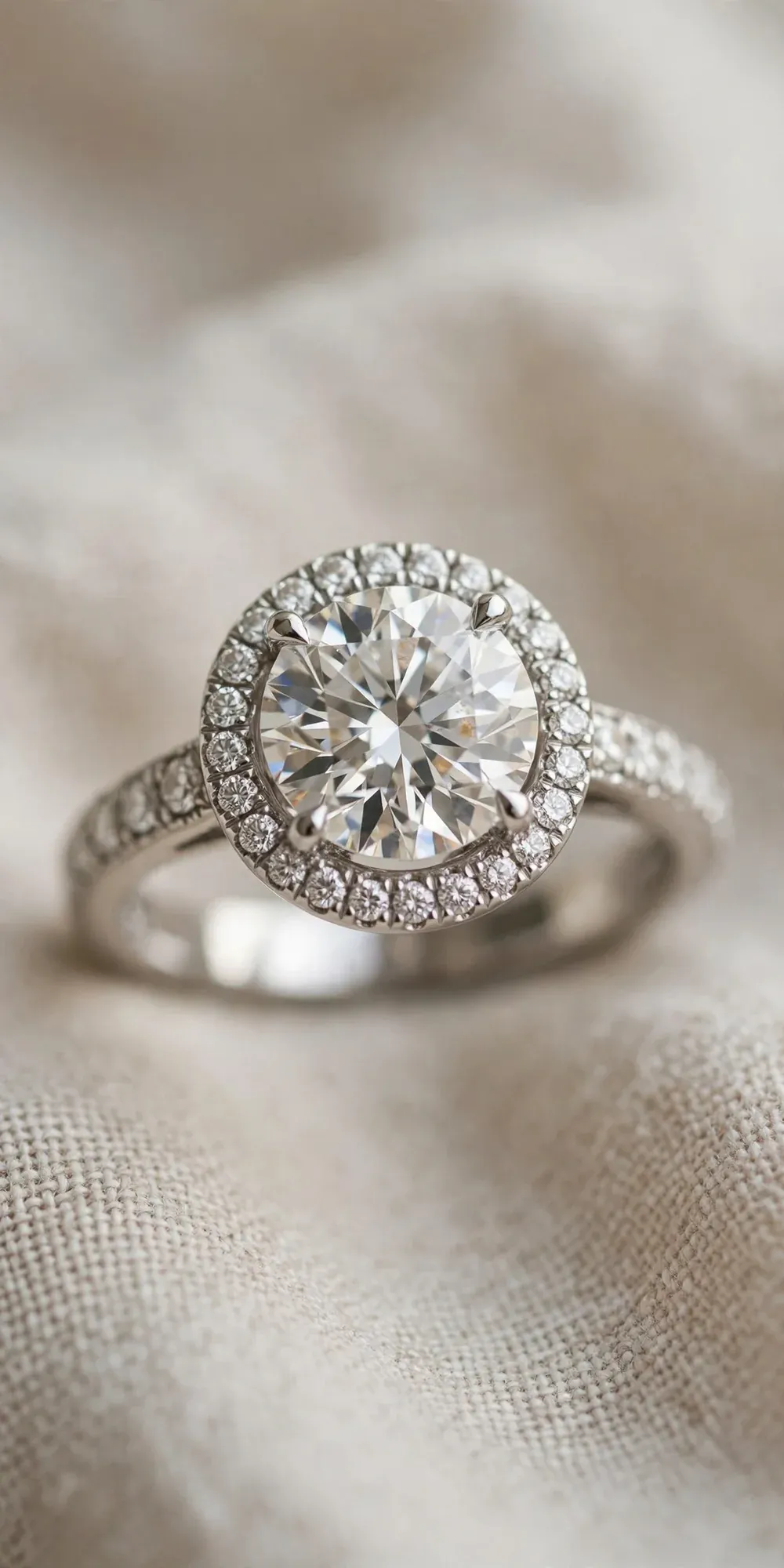
A halo ring surrounds the center stone with a ring of small diamonds, which makes the main stone look larger than it is. The halo also adds sparkle from every angle, since light bounces off the small stones as your hand moves. Halos come in round, cushion, and oval shapes, and the halo itself can be single or double, with a second row of small stones for extra size. This setting suits brides who want a big look without the price of a very large center stone. The trade-off is cleaning: small stones trap lotion and soap, so the ring needs a soft brush wash more often than a plain band. Styling tip: match the halo shape to your center stone shape, since a round halo on an oval stone can look mismatched in close-up photos.
Ring Stack
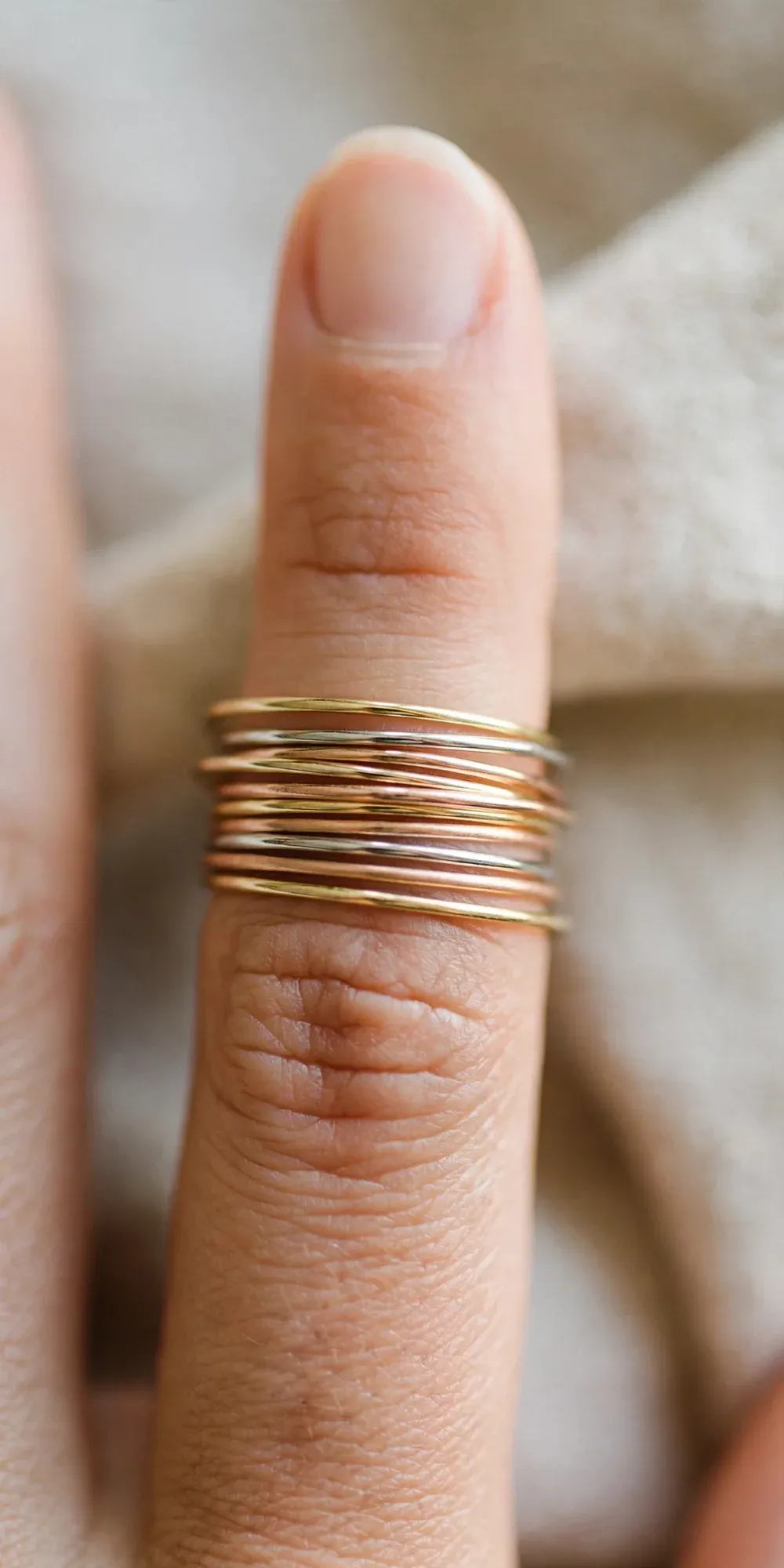
A ring stack is three or more thin bands worn together on one finger, instead of a single wide band. The bands can mix metals, like yellow gold, rose gold, and white gold, and mix textures, like polished, twisted, and diamond-set bands. The wedding band, engagement ring, and one or two extra bands usually make up the stack, and brides often add a band for an anniversary or a birthday. Thin bands, around 1.5 to 2 millimeters each, stack best, since thicker bands push each other apart and feel bulky. The look is personal and easy to change: swap one band and the whole stack feels different. Styling tip: keep one plain metal band in the stack, since it gives the eye a rest between diamond bands and keeps the stack from looking busy.
Plain Wedding Band
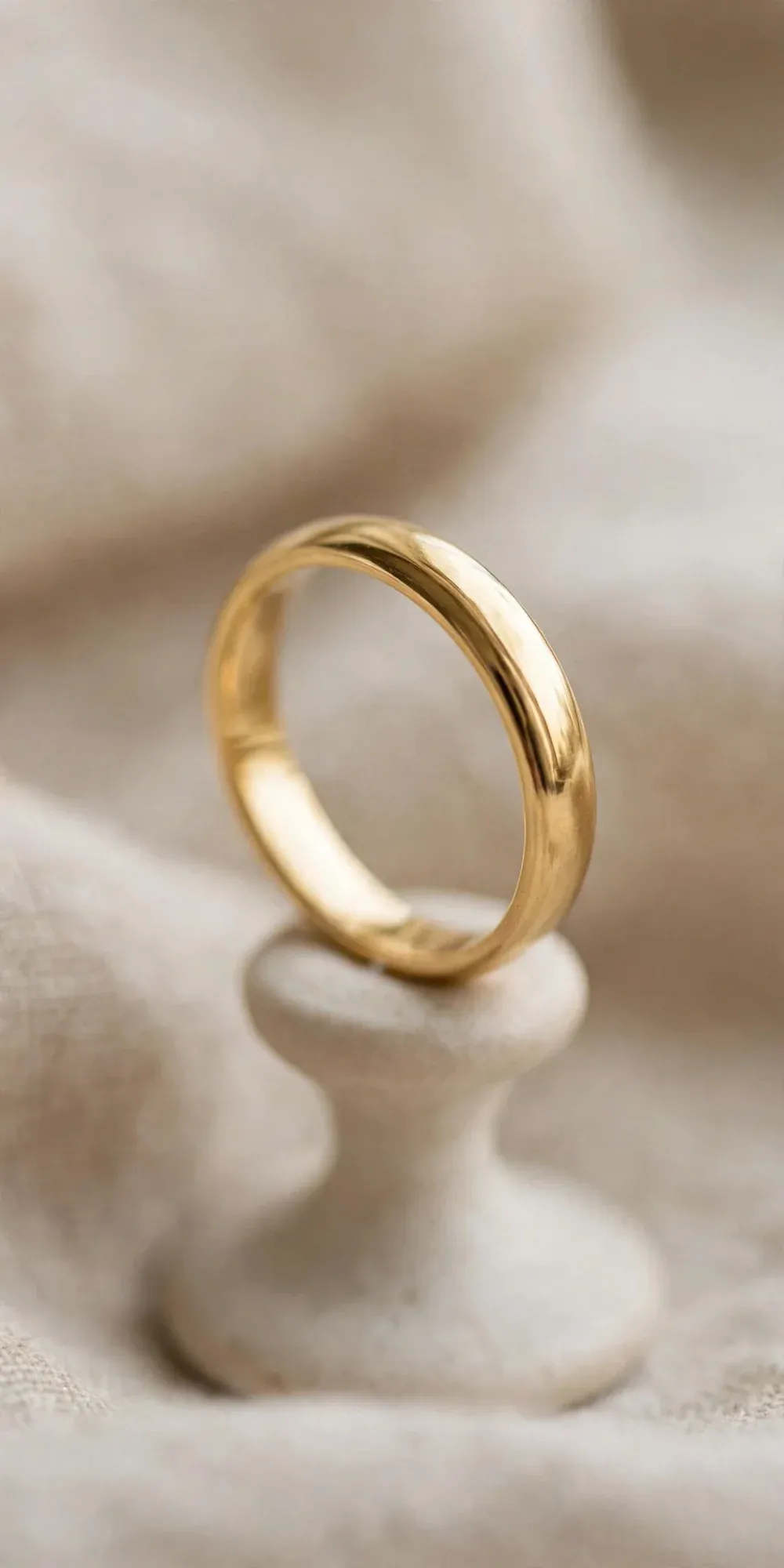
The plain wedding band is the ring exchanged at the ceremony, and it is often the simplest ring a bride owns. It has no stones, just a smooth band of gold, platinum, or another metal, usually with a comfort fit inside so it slides on easily. Width is the main choice: a narrow band around 2 millimeters looks delicate, while a wider band around 4 to 5 millimeters makes a stronger statement and suits longer fingers. A plain band never dates, never clashes with other jewelry, and costs far less than a stone-set ring. It also pairs with any engagement ring, since there are no stones to compete with. Styling tip: try the band on with your engagement ring before you buy, since the two rings should sit flush together without a gap.
Rose Gold Ring
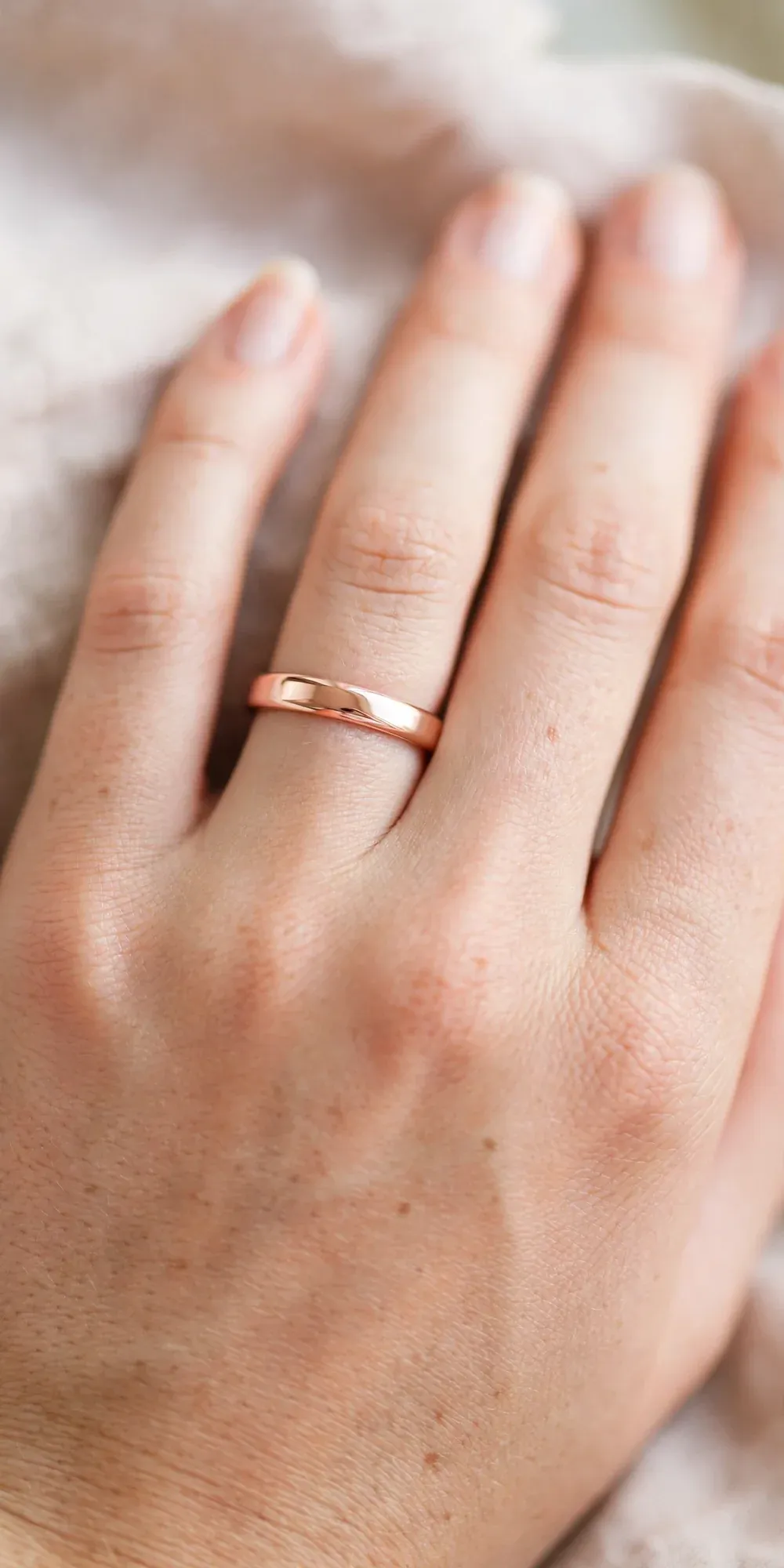
Rose gold gets its soft pink color from copper mixed into the gold, and the shade can range from pale blush to deep pink depending on how much copper is used. It has a romantic, warm feel that suits vintage and bohemian wedding styles, and it flatters most skin tones because the pink sits between yellow and white gold. Rose gold is also slightly harder than yellow gold thanks to the copper, so it holds up well to daily wear. It pairs beautifully with blush dresses, pink diamonds, and morganite stones, and it looks striking next to a white gold engagement ring for a mixed-metal set. One thing to check is a copper allergy, since the copper content can irritate very sensitive skin. Styling tip: if your skin is fair, pick a paler rose gold, since deep pink can look strong against very light skin in photos.
Emerald Cut Ring
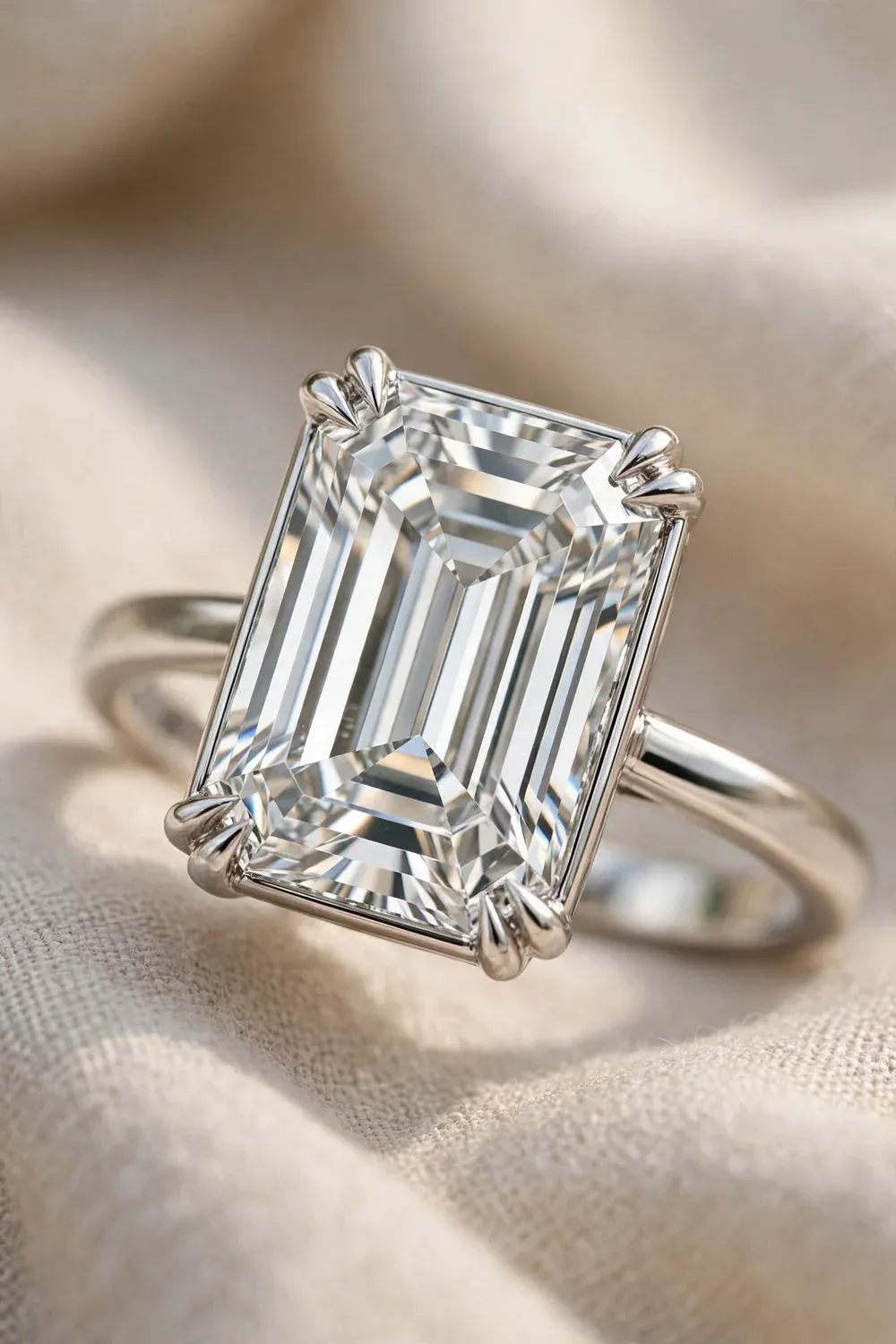
An emerald cut diamond is rectangular with cut corners and long, flat facets arranged like steps, which gives it a hall-of-mirrors look instead of the fiery sparkle of a round cut. The clean lines make it a favorite for art deco and minimalist styles, and the long shape makes fingers look longer and slimmer. Because the large flat top shows everything inside the stone, clarity matters more here than in any other cut: even small marks show clearly, so pick a higher clarity grade. The setting is usually a simple four-prong or a slim halo that does not hide the corners. Emerald cuts suit brides who like understated luxury and clean geometry over flash. Styling tip: wear an emerald cut ring with a slim, plain wedding band, since a busy band fights with the clean lines of the stone.
Pear Shape Ring
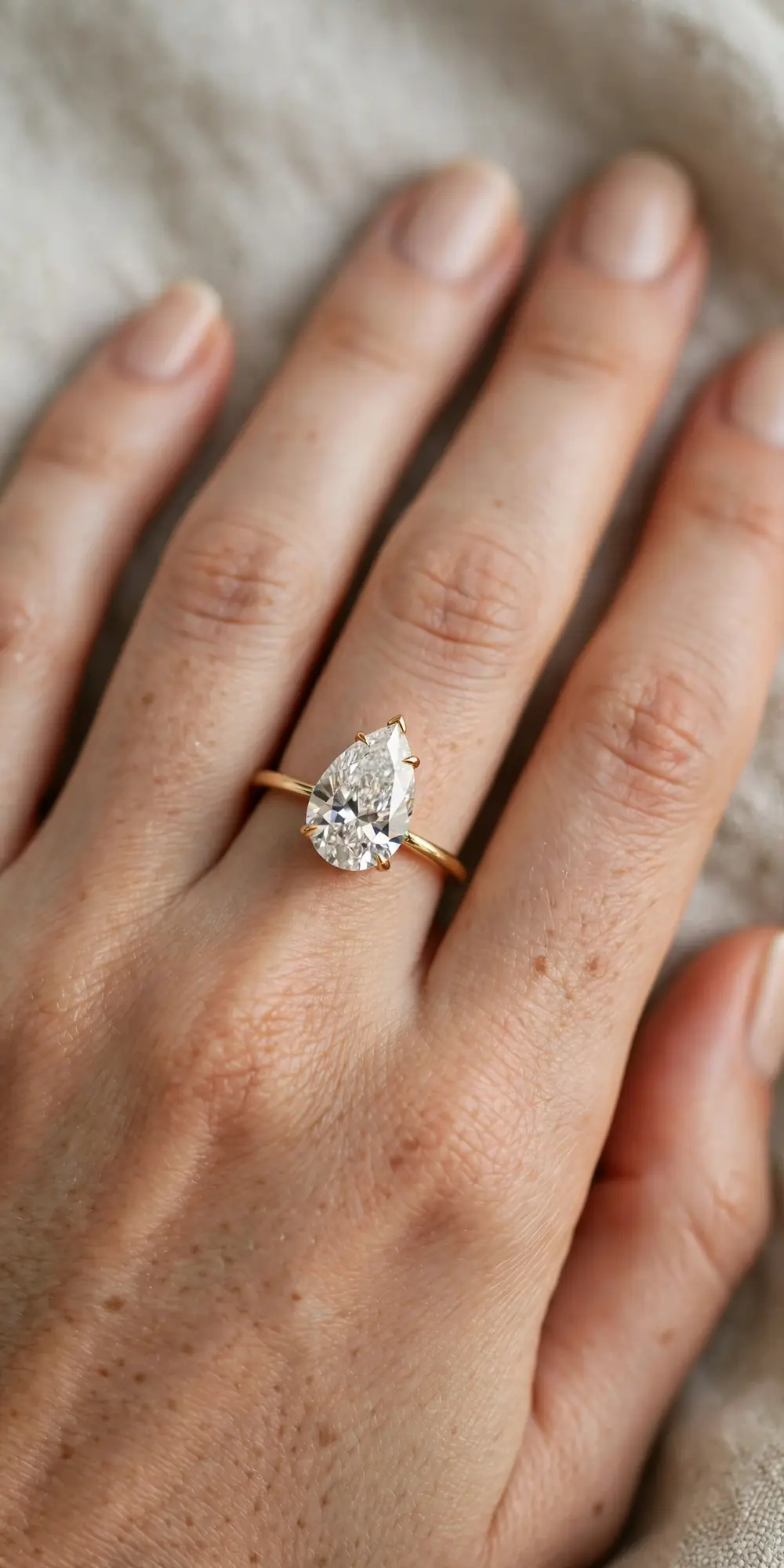
A pear shape diamond is a teardrop: round at one end and pointed at the other, combining the softness of an oval with the drama of a pointed tip. It is one of the most flattering shapes, since the long line makes the finger look longer and slimmer. Most brides wear it with the point facing outward toward the fingertip, which lengthens the hand, though some wear the point inward for a softer look. The point is the fragile part, so a good setting protects it with a V-shaped prong that covers the tip. Pear shapes work well as solitaires and as halo rings, and they suit both vintage and modern styles. Styling tip: if you pick a pear shape, check the symmetry carefully in the shop, since an uneven teardrop is easy to spot once the ring is on your hand.
The right ring is the one you enjoy looking at every day, not the one with the biggest stone or the highest price. Start with the metal you like against your skin, then pick a stone shape that flatters your hand, then choose a setting that fits your daily life. Try each style on your own finger before you decide, since rings look very different on a hand than they do in a display case.
For more ideas like this, visit our Bridal Jewelry and Accessories Ideas page.